
 MRI Scan
 CT Scan
 Health Checkups
 Ultrasound
 Lab Tests
 2D Echo
 ECG
ECG EEG
EEG ENMG/NCV
 Health Screening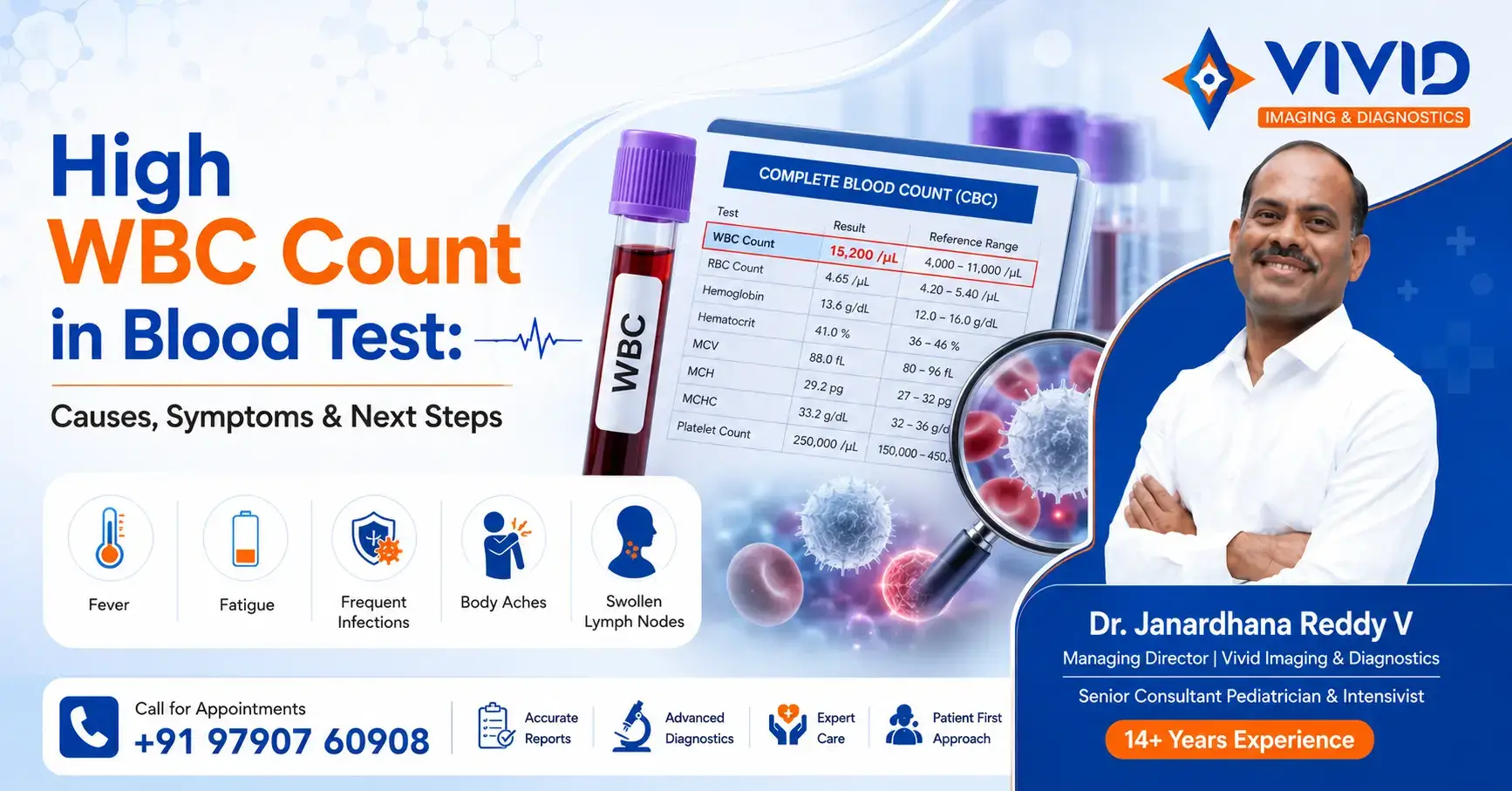
Table of Contents
- What Is a WBC Count?
- What Is Considered a High WBC Count?
- Common Symptoms of High WBC Count
- Types of White Blood Cells and Their Functions
- Causes of High WBC Count
- High WBC Count Due to Infection
- High WBC Count Without Infection: Other Possible Causes
- When Is a High WBC Count Dangerous?
- What Should You Do If Your Blood Test Shows a High WBC Count?
- Which Tests Help Identify the Cause?
- How Is High WBC Count Treated?
- When Should You See a Doctor?
- Why Choose Vivid Diagnostics?
- Frequently Asked Questions
- Conclusion
Many people become concerned when they notice a high WBC count in their blood test report. While an elevated white blood cell (WBC) count does not always indicate a serious illness, it is an important sign that your body may be responding to an infection, inflammation, stress, or another underlying medical condition.
Understanding the causes of a high WBC count, recognizing associated symptoms, and knowing the appropriate next steps can help you make informed decisions about your health.
What Is a WBC Count?
White blood cells, also known as leukocytes, are an essential part of the immune system. Their primary role is to protect the body against infections, viruses, bacteria, fungi, and other harmful substances.
A WBC count measures the number of white blood cells present in your blood and is typically included in a Complete Blood Count (CBC) test.
Why Are White Blood Cells Important?
White blood cells help:
- Fight infections
- Respond to inflammation
- Destroy harmful microorganisms
- Support immune system function
- Protect the body from disease
What Is Considered a High WBC Count?
A normal white blood cell count generally ranges between 4,000 and 11,000 cells per microliter of blood.
A high WBC count, medically known as leukocytosis, occurs when white blood cell levels rise above the normal range.
However, the interpretation depends on factors such as:
- Age
- Pregnancy
- Current infections
- Medications
- Medical history
This is why professional evaluation is important.
Common Symptoms of High WBC Count
In many cases, high WBC count itself does not cause symptoms. Instead, symptoms usually result from the underlying condition responsible for the elevated count.
Fever
Fever is one of the most common signs of infection-related high WBC count.
Fatigue
Many individuals experience weakness and tiredness when the immune system is actively fighting an illness.
Body Aches
Inflammation and infection can cause muscle aches and general discomfort.
Swollen Lymph Nodes
Enlarged lymph nodes may occur when the body responds to infection.
Persistent Cough
Respiratory infections often lead to elevated white blood cell counts.
Shortness of Breath
Certain lung conditions and infections can contribute to both breathing difficulties and increased WBC levels.
Night Sweats
Night sweats may occur with infections, inflammatory conditions, or certain blood disorders.
Unexplained Weight Loss
Unexpected weight loss combined with a high WBC count should always be evaluated by a healthcare professional.
Types of White Blood Cells and Their Functions
Understanding the different types of white blood cells helps identify possible causes.
Neutrophils
Fight bacterial infections and are commonly elevated during acute infections.
Lymphocytes
Help combat viral infections and support immune memory.
Monocytes
Remove damaged tissue and help fight infections.
Eosinophils
Often increase during allergic reactions and parasitic infections.
Basophils
Play a role in allergic responses and inflammation.
Causes of High WBC Count
A high WBC count can result from various medical conditions.
Bacterial Infections
One of the most common causes of elevated white blood cells.
Viral Infections
Certain viral illnesses may temporarily increase WBC levels.
Inflammatory Conditions
Diseases such as rheumatoid arthritis and inflammatory bowel disease can elevate WBC counts.
Allergic Reactions
Severe allergies may trigger an increase in specific white blood cells.
Physical or Emotional Stress
Stress can temporarily increase white blood cell production.
Smoking
Long-term smoking is associated with higher WBC levels.
Certain Medications
Steroids and some medications can raise white blood cell counts.
Bone Marrow Disorders
Rarely, elevated WBC counts may indicate blood-related conditions requiring further investigation.
High WBC Count Due to Infection
When an infection enters the body, the immune system responds by producing more white blood cells to fight the invading microorganisms.
Common infections associated with high WBC count include:
- Respiratory infections
- Urinary tract infections
- Skin infections
- Dental infections
- Gastrointestinal infections
High WBC Count Without Infection: Other Possible Causes
Not every elevated WBC count indicates infection.
Possible non-infectious causes include:
- Chronic inflammation
- Autoimmune diseases
- Severe stress
- Smoking
- Pregnancy
- Allergic conditions
- Certain blood disorders
When Is a High WBC Count Dangerous?
A mildly elevated WBC count is often temporary and harmless.
However, further evaluation is recommended if:
- WBC levels remain elevated for an extended period
- Counts are significantly above normal
- Symptoms worsen
- Weight loss occurs
- Recurrent infections develop
- Abnormal CBC findings are present
What Should You Do If Your Blood Test Shows a High WBC Count?
Finding a high WBC count on a blood test report does not automatically mean you have a serious illness.
Step 1: Review Your Symptoms
Consider whether you have:
- Fever
- Cough
- Infection symptoms
- Fatigue
- Recent illness
Step 2: Consult a Healthcare Professional
A healthcare provider can interpret your results in context.
Step 3: Complete Additional Testing if Needed
Further investigations may be recommended to determine the underlying cause.
Step 4: Monitor Changes Over Time
Repeat testing may help assess whether the elevation is temporary or persistent.
Which Tests Help Identify the Cause?
Complete Blood Count (CBC)
Provides a detailed overview of blood cell levels.
Differential WBC Count
Shows the percentage of each white blood cell type.
C-Reactive Protein (CRP)
Helps identify inflammation.
ESR Test
Measures inflammatory activity in the body.
Blood Culture
Used when bacterial infection is suspected.
Peripheral Blood Smear
Allows microscopic evaluation of blood cells.
How Is High WBC Count Treated?
Treatment focuses on addressing the underlying cause rather than the WBC count itself.
Possible treatments may include:
- Antibiotics for bacterial infections
- Anti-inflammatory medications
- Allergy management
- Treatment of chronic conditions
- Monitoring and follow-up testing
When Should You See a Doctor?
Seek medical advice if you experience:
- Persistent fever
- Ongoing fatigue
- Swollen lymph nodes
- Unexplained weight loss
- Recurrent infections
- Abnormal CBC results
Early evaluation can help identify potential health issues before complications develop.
Why Choose Vivid Diagnostics for Blood Testing?
At Vivid Diagnostics, we provide accurate and reliable pathology services to help patients better understand their blood test results.
Our advanced diagnostic services include:
- Complete Blood Count (CBC)
- Differential WBC Count
- ESR Testing
- CRP Testing
- Infection Screening Tests
- Comprehensive Health Checkups
With modern laboratory technology, experienced professionals, and quality-focused reporting, Vivid Diagnostics helps patients and healthcare providers make informed medical decisions.
Frequently Asked Questions About High WBC Count
Is a high WBC count always a sign of infection?
No. While infections are a common cause, stress, inflammation, smoking, allergies, and other medical conditions can also elevate WBC levels.
Can stress cause a high WBC count?
Yes. Physical and emotional stress can temporarily increase white blood cell production.
Should I worry about a high WBC count?
Not necessarily. The significance depends on the degree of elevation, symptoms, and underlying cause.
Can dehydration increase WBC count?
In some cases, dehydration may cause blood concentration changes that affect test results.
What is the best test for evaluating a high WBC count?
A Complete Blood Count (CBC) with Differential is typically the first and most important test.
Conclusion
A high WBC count is an important signal that your body may be responding to infection, inflammation, stress, or another underlying health condition. While mild elevations are often temporary, persistent or significantly elevated levels should never be ignored.
If your blood test shows a high WBC count, proper evaluation and follow-up testing can help identify the cause and guide appropriate treatment.
At Vivid Diagnostics, our comprehensive blood testing services help patients gain accurate insights into their health and take the right next steps toward better well-being.