
 MRI Scan
 CT Scan
 Health Checkups
 Ultrasound
 Lab Tests
 2D Echo
 ECG
ECG EEG
EEG ENMG/NCV
 Health Screening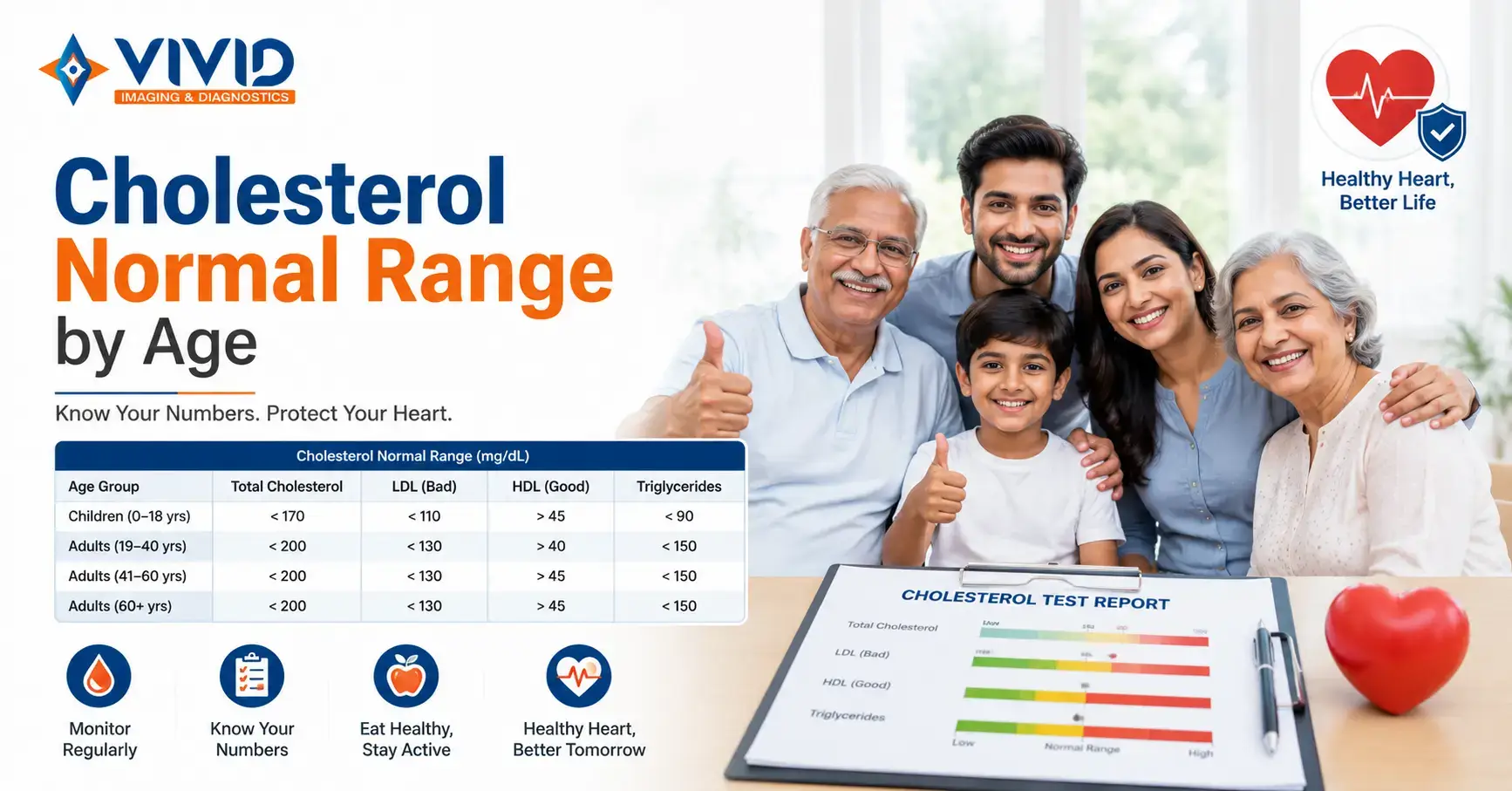
Cholesterol is often misunderstood. While many people think cholesterol is harmful, your body actually needs it to build healthy cells, produce hormones, and make vitamin D. The problem begins when cholesterol levels become too high, increasing the risk of heart disease, stroke, and other cardiovascular conditions.
Understanding the cholesterol normal range by age is essential because cholesterol levels naturally change as we grow older. Factors such as age, gender, genetics, diet, physical activity, and underlying medical conditions can all influence your lipid profile.
Regular cholesterol testing helps identify abnormal levels early, allowing you to make lifestyle changes or receive treatment before serious complications develop.
In this guide, you’ll learn the normal cholesterol ranges by age, how to understand your lipid profile report, what each cholesterol value means, and how to maintain healthy cholesterol levels.
Table of Contents
- What Is Cholesterol?
- Why Is Cholesterol Testing Important?
- Understanding Your Lipid Profile
- Cholesterol Normal Range by Age
- Cholesterol Normal Range for Men and Women
- What Causes High Cholesterol?
- Symptoms of High Cholesterol
- How Is Cholesterol Tested?
- Tips to Maintain Healthy Cholesterol Levels
- Why Choose Vivid Imaging & Diagnostics?
- Frequently Asked Questions
- Conclusion
What Is Cholesterol?
Cholesterol is a waxy, fat-like substance found in every cell of your body. It helps produce hormones, vitamin D, and bile acids that aid digestion.
Your body produces most of the cholesterol it needs, while the rest comes from foods such as meat, dairy products, eggs, and processed foods.
A lipid profile test measures different types of cholesterol to evaluate your heart health.
The major components include:
- Total Cholesterol
- Low-Density Lipoprotein (LDL) – often called “bad cholesterol”
- High-Density Lipoprotein (HDL) – often called “good cholesterol”
- Triglycerides
Each plays a different role in cardiovascular health.
Why Is Cholesterol Testing Important?
High cholesterol usually develops silently without noticeable symptoms. Many people only discover they have high cholesterol after experiencing complications such as a heart attack or stroke.
Regular cholesterol screening helps:
- Detect abnormal cholesterol early
- Assess your risk of heart disease
- Monitor treatment effectiveness
- Guide lifestyle changes
- Reduce the risk of cardiovascular complications
Understanding Your Lipid Profile
A standard lipid profile includes four important measurements.
Total Cholesterol
This represents the total amount of cholesterol in your blood.
LDL Cholesterol
LDL carries cholesterol to your arteries. High LDL levels can lead to plaque buildup, narrowing blood vessels and increasing the risk of heart disease.
HDL Cholesterol
HDL helps remove excess cholesterol from your bloodstream and transports it back to the liver for disposal. Higher HDL levels are generally protective.
Triglycerides
Triglycerides are a type of fat stored in the body. High levels are associated with obesity, diabetes, and increased cardiovascular risk.
Cholesterol Normal Range by Age
Although cholesterol goals are based primarily on overall cardiovascular risk rather than age alone, the following values are generally accepted for healthy individuals.
Cholesterol Normal Range by Age for Children (2–19 Years)
| Lipid | Healthy Level |
| Total Cholesterol | Less than 170 mg/dL |
| LDL Cholesterol | Less than 110 mg/dL |
| HDL Cholesterol | More than 45 mg/dL |
| Triglycerides | Less than 90 mg/dL (varies by age) |
Children with obesity, diabetes, or a family history of early heart disease may require earlier screening.
Cholesterol Normal Range by Age for Adults (20 Years and Above)
| Test | Desirable Level |
| Total Cholesterol | Less than 200 mg/dL |
| LDL Cholesterol | Less than 100 mg/dL |
| HDL Cholesterol | 40 mg/dL or higher in men; 50 mg/dL or higher in women |
| Triglycerides | Less than 150 mg/dL |
These targets may differ for people with diabetes, kidney disease, or established cardiovascular disease.
Cholesterol Normal Range by Age for Older Adults
As people age, cholesterol levels may rise due to changes in metabolism, physical activity, and hormone levels.
For older adults, healthcare providers interpret cholesterol results alongside factors such as:
- Blood pressure
- Diabetes
- Smoking status
- Kidney disease
- Existing heart disease
- Family history
Treatment decisions are based on overall cardiovascular risk rather than age alone.
Cholesterol Normal Range for Men and Women
Men and women have slightly different HDL targets.
| Test | Men | Women |
| HDL Cholesterol | 40 mg/dL or higher | 50 mg/dL or higher |
| LDL Cholesterol | Less than 100 mg/dL | Less than 100 mg/dL |
| Total Cholesterol | Less than 200 mg/dL | Less than 200 mg/dL |
| Triglycerides | Less than 150 mg/dL | Less than 150 mg/dL |
Women may experience changes in cholesterol levels after menopause due to hormonal changes.
What Causes High Cholesterol?
Several lifestyle and medical factors can increase cholesterol levels.
Common causes include:
- Diet high in saturated and trans fats
- Lack of physical activity
- Obesity
- Smoking
- Excessive alcohol intake
- Diabetes
- Hypothyroidism
- Kidney disease
- Family history of high cholesterol
- Increasing age
Symptoms of High Cholesterol
High cholesterol is often called a silent condition because it usually causes no symptoms.
In severe cases, complications may include:
- Chest pain
- Heart attack
- Stroke
- Peripheral artery disease
This is why routine cholesterol screening is essential, even if you feel healthy.
How Is Cholesterol Tested?
A lipid profile test measures cholesterol and triglyceride levels using a blood sample.
In many cases, healthcare providers recommend fasting for 9–12 hours before the test, although non-fasting lipid testing may also be appropriate depending on your clinical situation and local laboratory protocols.
Your healthcare provider will advise whether fasting is required.
How Often Should You Check Your Cholesterol?
General recommendations include:
- Adults aged 20 years and older: Every 4–6 years if risk is low.
- People with diabetes, high blood pressure, obesity, or a family history of heart disease: More frequent testing as advised by a healthcare provider.
- Older adults and people receiving cholesterol-lowering treatment: Follow-up testing based on medical advice.
Tips to Maintain Healthy Cholesterol Levels
Healthy habits can improve your cholesterol profile and reduce the risk of heart disease.
Eat a Heart-Healthy Diet
Choose:
- Fruits
- Vegetables
- Whole grains
- Oats
- Nuts
- Seeds
- Fish rich in omega-3 fatty acids
- Lean protein
Limit:
- Fried foods
- Processed snacks
- Sugary foods
- Red meat
- Foods high in saturated and trans fats
Exercise Regularly
Aim for at least 150 minutes of moderate-intensity aerobic activity each week, along with muscle-strengthening exercises on two or more days, unless otherwise advised by your healthcare provider.
Maintain a Healthy Weight
Losing excess weight can improve LDL cholesterol, HDL cholesterol, and triglyceride levels.
Avoid Smoking
Quitting smoking can improve HDL cholesterol and lower the risk of cardiovascular disease.
Limit Alcohol Intake
Excessive alcohol consumption may increase triglyceride levels.
Why Choose Vivid Imaging & Diagnostics?
Regular cholesterol testing plays an important role in preventing heart disease.
At Vivid Imaging & Diagnostics, Hyderabad, we provide accurate Lipid Profile Tests using modern laboratory technology to help assess your cardiovascular risk.
Our services include:
- Lipid Profile Test
- Total Cholesterol Test
- HDL & LDL Cholesterol Testing
- Triglyceride Test
- Preventive Health Checkup Packages
- Comprehensive Blood Testing
Our experienced laboratory team is committed to delivering reliable results with timely reporting, helping you and your healthcare provider make informed decisions about your heart health.
To schedule your cholesterol test, visit Vivid Diagnostics.
Frequently Asked Questions
What is the normal cholesterol level by age?
For most healthy adults, desirable levels are: Total Cholesterol below 200 mg/dL, LDL below 100 mg/dL, HDL at least 40 mg/dL for men and 50 mg/dL for women, and Triglycerides below 150 mg/dL. Children have different reference ranges.
What is considered high LDL cholesterol?
An LDL cholesterol level of 160 mg/dL or higher is generally considered high, though treatment decisions depend on your overall cardiovascular risk.
Does cholesterol increase with age?
Cholesterol levels often rise with age due to changes in metabolism, hormones, and lifestyle. Regular screening becomes increasingly important as you get older.
Can high cholesterol be reduced naturally?
Yes. A healthy diet, regular exercise, maintaining a healthy weight, avoiding smoking, and limiting alcohol can help improve cholesterol levels. Some individuals may also require medication.
How often should I get a cholesterol test?
Adults with low cardiovascular risk are often screened every 4–6 years, while those with risk factors may need more frequent testing based on their healthcare provider’s advice.
Conclusion
Understanding the cholesterol normal range by age can help you take proactive steps to protect your heart and overall health. Because high cholesterol rarely causes symptoms, routine lipid profile testing is one of the most effective ways to detect abnormalities early. Whether you’re a young adult, middle-aged, or a senior, knowing your cholesterol numbers empowers you to make informed decisions about your lifestyle and medical care.
If you’re due for a cholesterol check or have risk factors such as diabetes, high blood pressure, obesity, or a family history of heart disease, consider scheduling a Lipid Profile Test at Vivid Imaging & Diagnostics. Early detection and timely management can significantly reduce your risk of cardiovascular disease and support long-term health.