
 MRI Scan
 CT Scan
 Health Checkups
 Ultrasound
 Lab Tests
 2D Echo
 ECG
 EEG
 ENMG/NCV
 Health Screening
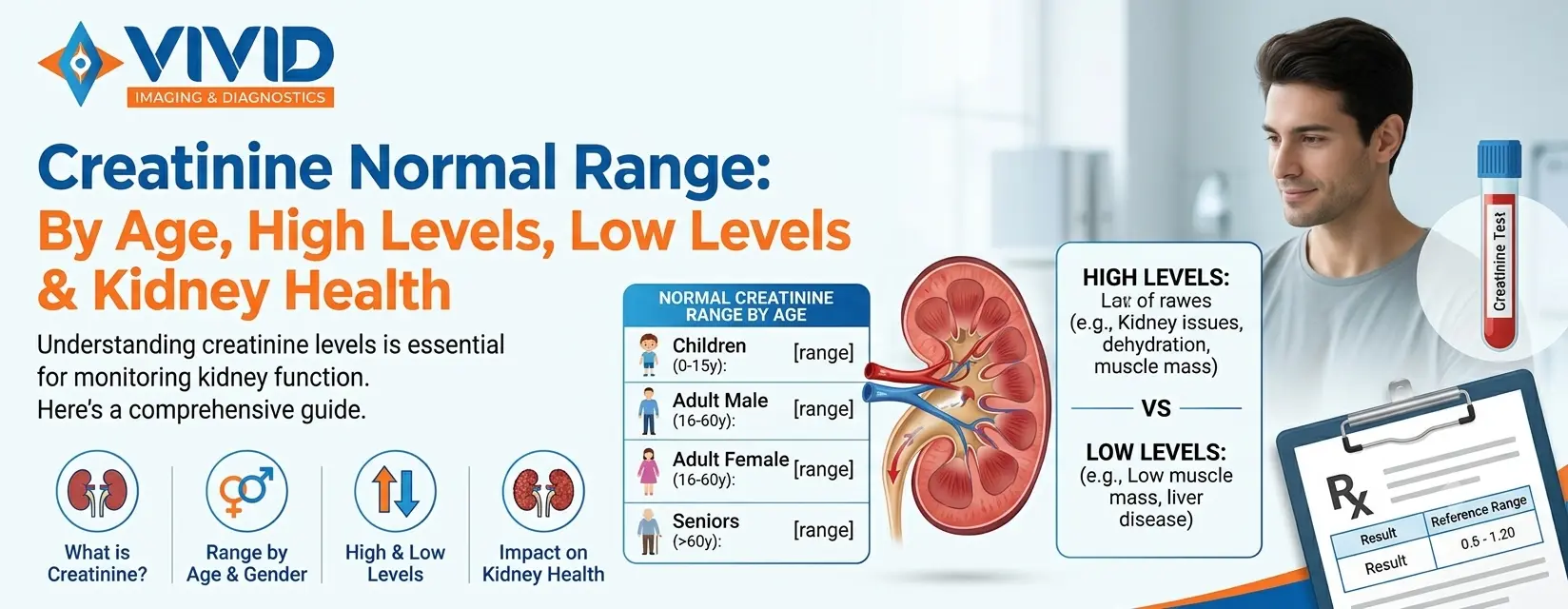
Understanding the Creatinine Normal Range can help you interpret your blood test report and understand how well your kidneys may be functioning. Creatinine is a waste product produced mainly by normal muscle metabolism. Healthy kidneys filter it from the blood and remove it through urine.
A blood creatinine test is commonly used to assess kidney function and may be performed as part of a kidney function test or renal profile. Higher-than-expected creatinine levels can indicate reduced kidney filtration, although dehydration, certain medicines, muscle mass, and other factors can also affect the result.
This guide explains normal creatinine levels, how they vary between individuals, what high or low results may mean, and when you may need further kidney testing.
Table of Contents
- What Is Creatinine?
- Creatinine Normal Range
- Creatinine Normal Range by Age and Sex
- What Does a High Creatinine Level Mean?
- Symptoms of High Creatinine
- Causes of Low Creatinine Levels
- How Is Creatinine Tested?
- Creatinine vs eGFR: What’s the Difference?
- How to Prepare for a Creatinine Blood Test
- When Should You Get a Creatinine Test?
- Creatinine Test in Hyderabad
- Frequently Asked Questions
- Conclusion
What Is Creatinine?
Creatinine is a waste product formed when muscles use energy. The amount produced depends partly on muscle mass and normal muscle metabolism.
The kidneys filter creatinine from the bloodstream. When kidney filtration decreases, creatinine may accumulate in the blood.
Doctors commonly use a serum creatinine test to help assess kidney function. The result is often considered alongside the estimated glomerular filtration rate (eGFR), urine albumin levels, medical history, and previous test results.
Important: Creatinine is a useful indicator of kidney function, but a single creatinine result cannot diagnose or rule out every kidney condition.
Creatinine Normal Range
The creatinine normal range varies according to the laboratory, age, sex, muscle mass, diet, and other individual factors.
The following values are approximate examples of commonly used adult reference ranges.
| Group | Approximate Serum Creatinine Range |
|---|---|
| Adult women | 0.5–1.0 mg/dL |
| Adult men | 0.7–1.3 mg/dL |
| Children | Varies substantially with age and growth |
| Older adults | Depends on muscle mass, age, and clinical context |
These are general guides, not universal cutoffs. Some laboratories use different reference intervals, so always compare your result with the range printed on your report.
What Is a Normal Creatinine Level in mg/dL?
Creatinine is commonly reported in milligrams per decilitre (mg/dL).
For many adults, a result around 0.6–1.3 mg/dL may fall within a commonly used reference interval, depending on the laboratory and individual characteristics.
However, the number should not be interpreted alone. For example, an older adult or a person with low muscle mass may have a creatinine level within the laboratory’s reference range despite having reduced kidney function.
What Is a Normal Creatinine Level in µmol/L?
Some laboratories report creatinine in micromoles per litre (µmol/L).
To convert creatinine:
- mg/dL to µmol/L: Multiply by approximately 88.4.
- µmol/L to mg/dL: Divide by approximately 88.4.
For example, 1.0 mg/dL is approximately 88.4 µmol/L.
Check the units on your laboratory report before comparing results.
Creatinine Normal Range by Age and Sex
Creatinine levels naturally differ among individuals. Age, muscle development, body composition, and kidney function all influence the result.
Creatinine Normal Range in Adults
Adult reference ranges are often different for men and women because average muscle mass differs between groups. However, individual variation is substantial.
A muscular person may have a higher creatinine level without kidney disease, while someone with low muscle mass may have a relatively low level despite impaired kidney filtration.
Creatinine Normal Range in Children
Children generally have lower creatinine levels than adults because they have less muscle mass. Their levels change as they grow.
A child’s result should be interpreted using an age-appropriate laboratory reference range. Adult reference values should not be applied to infants or children.
Creatinine Levels in Older Adults
Muscle mass often decreases with age. As a result, an older adult may have a creatinine level that appears normal even when kidney filtration has declined.
Doctors may use eGFR, urine albumin testing, previous results, and other clinical information to assess kidney health more accurately.
Key point: There is no single creatinine value that defines healthy kidney function for every age group.
What Does a High Creatinine Level Mean?
A creatinine level above the laboratory’s reference range may indicate that the kidneys are not filtering waste as effectively as expected. However, high creatinine does not always mean chronic kidney disease.
Possible causes include:
- Acute kidney injury
- Chronic kidney disease
- Dehydration
- Reduced blood flow to the kidneys
- Urinary tract obstruction
- Certain medicines
- Recent strenuous exercise
- High muscle mass or muscle injury
- Recent consumption of cooked meat, which can temporarily affect some results
High Creatinine and Kidney Disease
Kidney disease may cause creatinine to rise when filtration decreases. Doctors may compare the result with previous reports and assess eGFR to understand the severity of any reduction in kidney function.
Persistent kidney abnormalities may require additional tests, including urine albumin-to-creatinine ratio (uACR), urinalysis, blood pressure measurement, or kidney imaging when clinically indicated.
Can Dehydration Increase Creatinine?
Yes. Dehydration can reduce blood flow to the kidneys and may temporarily increase creatinine.
However, an elevated result should not automatically be attributed to dehydration. If the result is abnormal, your healthcare professional can determine whether repeat testing or further evaluation is needed.
Is High Creatinine Always Dangerous?
The significance depends on how high the result is, how quickly it has changed, the person’s symptoms, and other test findings.
A sudden rise can indicate acute kidney injury and needs prompt medical assessment. A persistently elevated level may suggest chronic kidney problems or another underlying condition.
Do not attempt to lower creatinine with unprescribed medicines, supplements, or excessive water intake.
Symptoms of High Creatinine
High creatinine itself usually does not cause symptoms. Symptoms may occur because of the underlying condition affecting the kidneys.
Possible warning signs include:
- Swelling around the feet, ankles, or face
- Changes in the amount or frequency of urination
- Blood in the urine
- Persistent fatigue or weakness
- Nausea or reduced appetite
- Shortness of breath
- Muscle cramps
- Difficulty concentrating
These symptoms can have many causes and do not confirm kidney disease on their own.
Seek urgent medical care if you have very little or no urine, severe breathlessness, confusion, or rapidly worsening swelling. A sudden change in kidney function requires prompt assessment even if symptoms are mild.
Causes of Low Creatinine Levels
A low creatinine result is often related to lower muscle mass rather than a kidney problem.
Possible causes include:
- Low muscle mass
- Age-related muscle loss
- Malnutrition
- Certain muscle-wasting conditions
- Pregnancy-related changes in kidney filtration and blood volume
- Some serious underlying illnesses
Low creatinine is generally less commonly used as a marker of kidney disease than high creatinine. However, it should be interpreted in context, particularly if there are concerns about nutrition, muscle loss, or other medical conditions.
How Is Creatinine Tested?
A creatinine test may involve a blood sample, a urine sample, or both, depending on what your healthcare professional needs to assess.
1. Serum Creatinine Test
This blood test measures the amount of creatinine in the bloodstream. It is commonly used to assess kidney function and calculate eGFR.
2. Urine Creatinine Test
Urine creatinine may be measured as part of a urine test or used to calculate ratios, such as the urine albumin-to-creatinine ratio.
The uACR helps detect albumin in the urine and can identify kidney damage even when blood creatinine appears normal.
3. Creatinine Clearance Test
Creatinine clearance estimates how efficiently the kidneys remove creatinine from the blood. It may involve blood testing and a timed urine collection, often over 24 hours.
It is used in selected clinical situations, although eGFR is commonly used for routine assessment of kidney filtration.
Creatinine vs eGFR: What’s the Difference?
Creatinine and eGFR are related but not identical.
| Measurement | What It Shows |
|---|---|
| Serum creatinine | The concentration of creatinine in the blood |
| eGFR | An estimate of how much blood the kidneys filter per minute, adjusted to a standard body surface area |
| Urine albumin-to-creatinine ratio | The amount of albumin in urine relative to creatinine, helping detect kidney damage |
eGFR is calculated using serum creatinine and other variables, depending on the equation used. It often provides a more useful estimate of kidney filtration than creatinine alone.
An eGFR below 60 mL/min/1.73 m² that persists for at least three months can indicate chronic kidney disease. Kidney damage markers, such as persistent albumin in urine, can also indicate chronic kidney disease even when eGFR is 60 or higher.
A single abnormal result does not always establish chronic kidney disease. The duration, pattern of results, and clinical findings matter.
How to Prepare for a Creatinine Blood Test
Preparation depends on the test and the reason it has been ordered.
Is Fasting Required?
A serum creatinine test alone often does not require fasting. However, fasting may be required if other blood tests are being performed at the same time.
Follow the specific instructions provided by your doctor or laboratory.
Can You Drink Water Before the Test?
Plain water is generally allowed before a routine creatinine blood test unless you have been given different instructions.
Do not deliberately drink excessive amounts of water to change your result. People with certain heart or kidney conditions may need to follow fluid restrictions.
Do Medicines Affect Creatinine?
Yes. Some medicines can affect kidney function or influence how creatinine is measured. Tell your healthcare professional about prescription medicines, over-the-counter medicines, and supplements you take.
Do not stop prescribed medication without medical advice.
Does Exercise Affect Creatinine?
Strenuous exercise and muscle injury can temporarily affect creatinine levels. Inform your healthcare professional if you have recently completed intense exercise or experienced a significant muscle injury.
When Should You Get a Creatinine Test?
Your healthcare professional may recommend a creatinine test if you:
- Have diabetes
- Have high blood pressure
- Have known kidney disease
- Have a family history of certain kidney conditions
- Take medicines that require kidney monitoring
- Have symptoms suggesting a kidney problem
- Have abnormal urine test results
- Need monitoring before or during certain medical treatments
People with diabetes or other risk factors may need periodic assessment using both eGFR and urine albumin testing.
Testing frequency depends on your health history, previous results, and risk of kidney disease.
How Can You Support Healthy Kidney Function?
Creatinine levels should not be treated as a number to lower without understanding the cause. The appropriate approach depends on whether an abnormal result is due to dehydration, kidney disease, medication effects, muscle-related factors, or another condition.
To support kidney health:
- Keep blood pressure within the range recommended by your healthcare professional.
- Manage diabetes if you have it.
- Stay hydrated according to your individual needs and any medical advice.
- Avoid frequent or unnecessary use of medicines that can harm the kidneys, particularly certain painkillers, without professional guidance.
- Avoid unverified supplements or remedies advertised as kidney cleanses.
- Follow your prescribed treatment plan.
- Attend recommended follow-up appointments and kidney tests.
If your creatinine is elevated, your doctor may recommend repeat testing, medication review, urine testing, or other investigations depending on the result.
Creatinine Test in Hyderabad
If you need a Creatinine Test in Hyderabad, a serum creatinine test can help assess kidney function when recommended by your healthcare professional.
Vivid Imaging & Diagnostics in Chandanagar, Hyderabad, provides diagnostic services for patients seeking blood and urine testing. Before visiting, confirm the test required, preparation instructions, and expected reporting time.
If your report shows high or low creatinine, discuss it with a qualified healthcare professional. The result is most useful when interpreted alongside eGFR, urine albumin, medical history, symptoms, and previous test reports.
Frequently Asked Questions About Creatinine Normal Range
1. What is the normal creatinine level for adults?
Commonly used adult reference ranges are approximately 0.5–1.0 mg/dL for women and 0.7–1.3 mg/dL for men, although laboratory ranges vary. Your result should be interpreted with your eGFR and clinical history.
2. What creatinine level indicates kidney problems?
A creatinine result above the laboratory’s reference range may indicate reduced kidney filtration, but it can also be influenced by dehydration, muscle mass, exercise, and medicines. There is no single creatinine number that diagnoses every kidney problem.
3. Can creatinine be normal even if kidney function is reduced?
Yes. People with low muscle mass, including some older adults, may have creatinine levels within the reference range despite reduced kidney filtration. eGFR and urine albumin testing can provide additional information.
4. Does a creatinine blood test require fasting?
Fasting is often not required for a creatinine test alone. If other tests are ordered with it, the laboratory may provide fasting instructions.
5. Can drinking water lower creatinine?
If dehydration is contributing to an elevated creatinine level, restoring appropriate hydration may help. However, drinking excessive water does not treat kidney disease and can be unsafe for some people. Follow individualized medical advice.
6. What is the difference between creatinine and eGFR?
Creatinine measures the concentration of a waste product in the blood. eGFR estimates how effectively the kidneys filter blood, using creatinine and other information. Both help assess kidney function.
7. Is a creatinine level of 1.2 mg/dL normal?
It may fall within the reference range for some adults, but its significance depends on the laboratory range, age, sex, muscle mass, and eGFR. A healthcare professional should interpret the result in context.
8. What causes low creatinine levels?
Low creatinine can be associated with low muscle mass, age-related muscle loss, malnutrition, pregnancy-related changes, or certain medical conditions. Its significance depends on the individual situation.
9. How often should creatinine be tested?
Testing frequency depends on your health and risk factors. People with kidney disease, diabetes, high blood pressure, or medicines requiring kidney monitoring may need regular testing as advised by their healthcare professional.
10. Where can I get a creatinine test in Chandanagar, Hyderabad?
You can contact Vivid Imaging & Diagnostics in Chandanagar, Hyderabad, to confirm the availability, preparation requirements, and reporting time for a serum creatinine test.
Conclusion
Understanding the Creatinine Normal Range can help you interpret your blood test report and identify when further kidney assessment may be needed. Creatinine levels vary with muscle mass, age, sex, and laboratory methods, so a result should never be interpreted in isolation.
A high creatinine result may indicate reduced kidney filtration, but dehydration, medicines, exercise, and other factors can also affect it. For a clearer assessment, doctors may review eGFR, urine albumin, previous reports, and your medical history.
If you have an abnormal creatinine result or risk factors such as diabetes or high blood pressure, discuss appropriate testing and follow-up with your healthcare professional.