
 MRI Scan
 CT Scan
 Health Checkups
 Ultrasound
 Lab Tests
 2D Echo
 ECG
 EEG
 ENMG/NCV
 Health Screening
Your kidneys are your body’s master filtration system, silently working 24/7 to clear toxins, balance electrolytes, and regulate your blood pressure. But how do you know if they are working at their best?
If you or a loved one recently received a blood test report, you might have noticed a mysterious line item called eGFR. What does it stand for, and more importantly, what do those numbers mean for your long-term health?
In this guide, we break down the eGFR meaning, what constitutes a normal range, and why monitoring your kidney health is crucial—especially if you have underlying conditions like diabetes or hypertension.
What is eGFR?
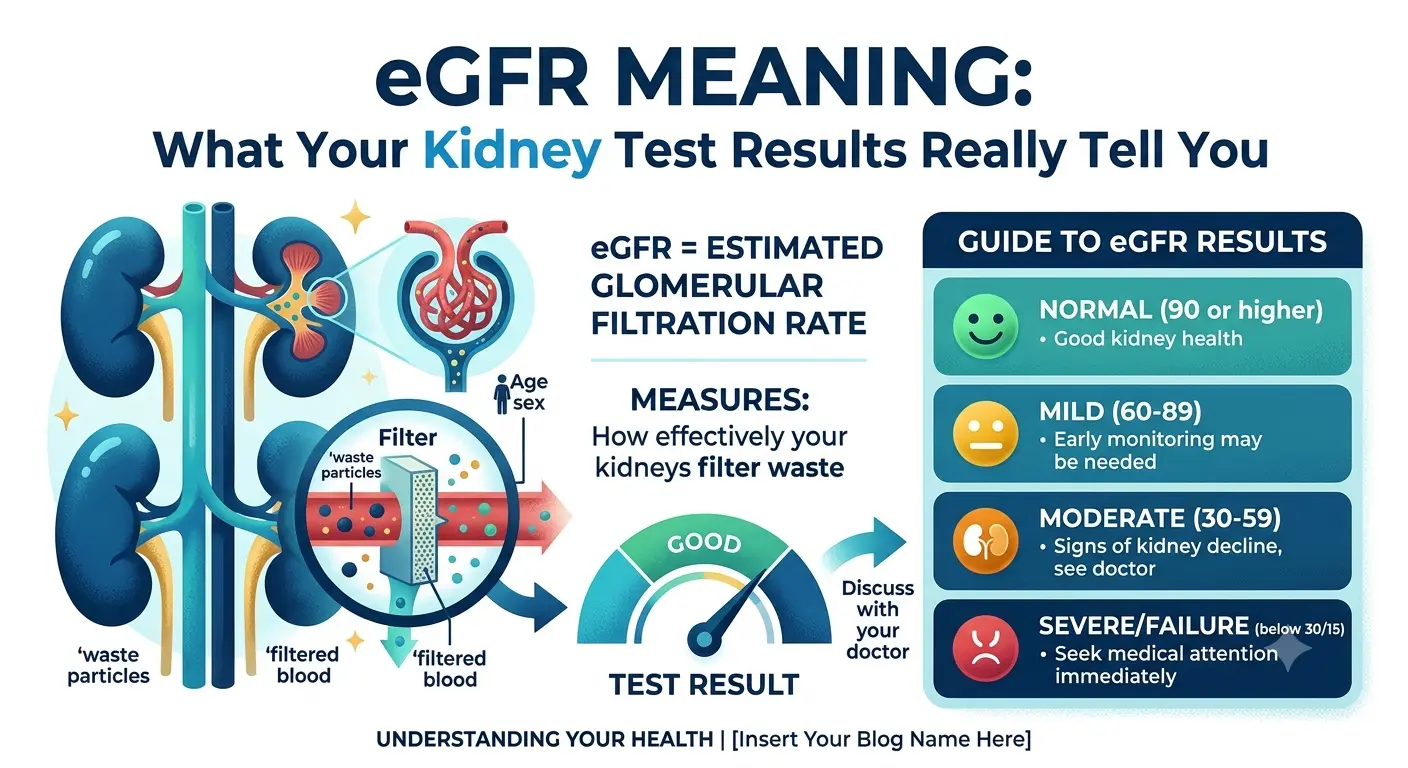
eGFR stands for Estimated Glomerular Filtration Rate.
- Glomerular Filtration Rate (GFR): This measures how much blood passes through the glomeruli (the tiny filtering units inside your kidneys) every minute. It’s essentially the ultimate report card for your kidneys’ filtering capacity.
- The “Estimated” Part: Because directly measuring GFR requires complex procedures, doctors use an estimation formula. This formula factors in the level of creatinine (a waste product from muscle breakdown) found in your blood, alongside your age, sex, and sometimes body size.
In short, your eGFR tells your doctor how efficiently your kidneys are cleaning your blood.
Understanding eGFR Ranges: What Do the Numbers Mean?
eGFR is measured in milliliters per minute per 1.73 square meters ($\text{mL/min/1.73 m}^2$). While precise targets can vary slightly depending on your age and medical history, standard clinical guidelines categorize eGFR results into five stages:
| eGFR Range (mL/min/1.73 m2) | Kidney Status / What It Means |
| 90 or higher | Normal or High Kidney Function. Your kidneys are filtering waste efficiently. Note: If other markers (like protein in urine) are present, early kidney damage may still exist. |
| 60–89 | Mildly Reduced Kidney Function. Common in older adults, but warrants monitoring to prevent further decline. |
| 45–59 | Mild to Moderately Decreased. Indicates early-to-moderate Chronic Kidney Disease (CKD). Requires lifestyle changes and medical oversight. |
| 30–44 | Moderate to Severely Decreased. Moderate CKD. Your doctor will likely coordinate a specialized treatment plan to protect remaining kidney function. |
| 15–29 | Severely Decreased. Advanced CKD. Close preparation and monitoring with a nephrologist are necessary. |
| Less than 15 | Kidney Failure (End-Stage Renal Disease). The kidneys are nearing or have lost their ability to filter waste, requiring dialysis or a kidney transplant. |
A Quick Note on Age: It is completely normal for eGFR values to gradually decline as you age—typically dropping slightly after age 40. A slightly lower score in an older adult does not automatically signal severe disease, which is why lab results must always be evaluated in context by a qualified physician.
Why is an eGFR Test Important?
Kidney disease is often called a “silent killer” because it rarely shows symptoms in its early stages. You can lose a significant portion of kidney function before noticing physical warning signs like fatigue, swelling in the ankles, or changes in urination.
An eGFR test (usually ordered as part of a routine Kidney Function Test (KFT) or a Comprehensive Metabolic Panel) allows doctors to:
- Catch problems early: Spotting a declining trend years before symptoms appear allows for effective lifestyle or medical intervention.
- Monitor chronic conditions: High blood pressure (hypertension) and diabetes are the leading causes of kidney damage. Regular eGFR tracking protects high-risk individuals.
- Guide safe medication dosing: Many common drugs are filtered through the kidneys; knowing your eGFR helps physicians adjust dosages safely.
Who Should Get an eGFR Test?
Your doctor may recommend an eGFR blood test if you have any of the following risk factors:
- Diabetes (Type 1 or Type 2)
- High blood pressure (Hypertension)
- Cardiovascular disease
- A family history of kidney failure
- Unexplained fatigue, foamy urine, or swelling in your hands, feet, or face
- Age over 50 with other risk factors
Take Control of Your Health with Vivid Diagnostics
Early detection is your greatest defense against chronic kidney disease. If it’s time for your routine health screening or your doctor has recommended a kidney function test, Vivid Diagnostics is here to deliver fast, accurate, and reliable results.
Powered by fully automated, state-of-the-art laboratory pathology analyzers, Vivid Diagnostics ensures uncompromising clinical accuracy.
- Convenient Testing Options: Visit our advanced diagnostic center or take advantage of our free home sample collection service.
- Rapid Turnaround: Receive your digital reports directly on WhatsApp and email within 2 to 4 hours.
Don’t leave your kidney health to guesswork. Book your Kidney Function Test (KFT) with Vivid Diagnostics today!