
 MRI Scan
 CT Scan
 Health Checkups
 Ultrasound
 Lab Tests
 2D Echo
 ECG
ECG EEG
EEG ENMG/NCV
 Health Screening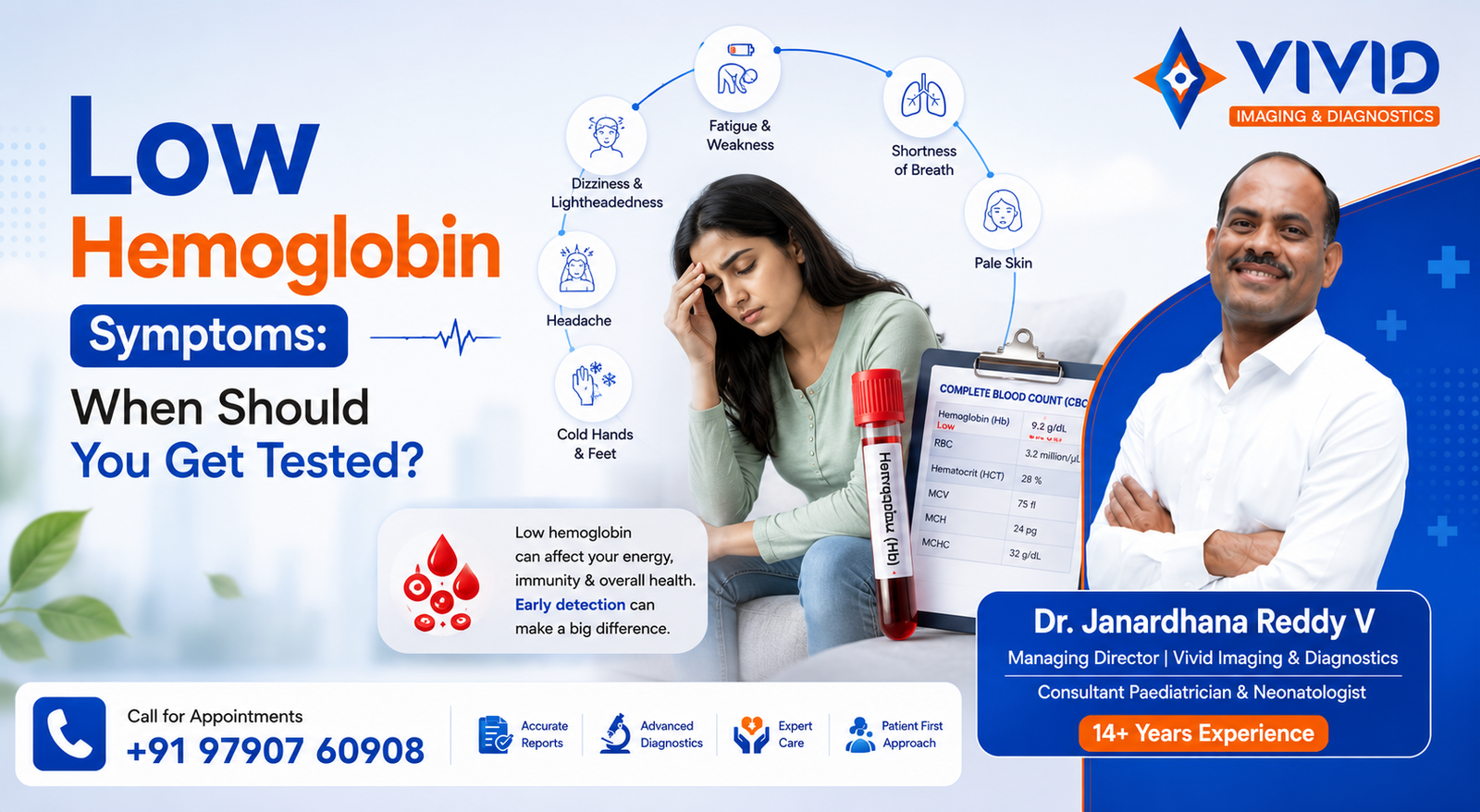
Table of Contents
- What Is Hemoglobin and Why Is It Important?
- Common Low Hemoglobin Symptoms You Should Never Ignore
- Symptoms of Low Hemoglobin Based on Severity
- Low Hemoglobin Symptoms in Women
- Low Hemoglobin Symptoms in Children and Older Adults
- What Causes Low Hemoglobin?
- Low Iron vs Low Hemoglobin: What’s the Difference?
- When Should You Get Tested for Low Hemoglobin?
- Which Tests Diagnose Low Hemoglobin?
- Foods That Help Improve Hemoglobin Levels
- Why Early Testing Matters
- Why Choose Vivid Diagnostics for Hemoglobin Testing?
- Frequently Asked Questions About Low Hemoglobin Symptoms
- Conclusion
Low hemoglobin symptoms often develop gradually and can easily be mistaken for stress, poor sleep, overwork, or nutritional deficiencies. However, when your hemoglobin levels drop below normal, your body struggles to deliver adequate oxygen to tissues and organs. This lack of oxygen can affect your energy levels, concentration, heart function, and overall well-being.
Many people ignore the early warning signs until symptoms become severe enough to interfere with daily life. Understanding low hemoglobin symptoms and knowing when to get tested can help detect underlying health conditions early and prevent long-term complications.
What Is Hemoglobin and Why Is It Important?
Hemoglobin is an iron-rich protein found inside red blood cells. Its primary role is to transport oxygen from the lungs to every part of the body and carry carbon dioxide back to the lungs for removal.
When hemoglobin levels decrease, your body’s organs and tissues receive less oxygen than they need. As a result, you may experience fatigue, weakness, dizziness, and other symptoms that affect your quality of life.
Normal Hemoglobin Levels
Although values may vary slightly depending on the laboratory, normal hemoglobin levels generally include:
- Adult Men: 13.8 to 17.2 g/dL
- Adult Women: 12.1 to 15.1 g/dL
- Pregnant Women: Above 11 g/dL
- Children: Varies according to age
Levels below the normal range may indicate anemia or another underlying medical condition that requires further evaluation.
Common Low Hemoglobin Symptoms You Should Never Ignore
Low hemoglobin symptoms can range from mild to severe depending on how low your levels are and how quickly they decrease.
Persistent Fatigue and Weakness
Persistent fatigue is one of the most common low hemoglobin symptoms. Since your muscles and organs receive less oxygen, everyday activities can become exhausting. Even after a full night’s sleep, you may still feel tired and drained.
Shortness of Breath During Daily Activities
If you become breathless while climbing stairs, walking short distances, or performing routine tasks, low hemoglobin may be limiting oxygen delivery throughout your body.
Pale Skin, Lips, and Gums
A noticeable loss of color in the skin, gums, nail beds, or inner eyelids may indicate reduced red blood cell production and low hemoglobin levels.
Dizziness and Lightheadedness
Low oxygen supply to the brain can result in dizziness, lightheadedness, and occasional fainting episodes.
Rapid Heartbeat or Heart Palpitations
Your heart may work harder to compensate for reduced oxygen levels, leading to heart palpitations, irregular heartbeat, or a racing pulse.
Frequent Headaches
Recurring headaches are another common symptom of low hemoglobin because the brain may not receive sufficient oxygen.
Difficulty Concentrating and Brain Fog
Many individuals with low hemoglobin symptoms report memory problems, poor concentration, mental fatigue, and reduced productivity.
Cold Hands and Feet
Poor oxygen circulation may cause your hands and feet to feel unusually cold, even during warm weather.
Hair Loss and Brittle Nails
Long-term low hemoglobin can affect hair follicles and nail health, leading to excessive hair shedding and brittle nails.
Chest Discomfort in Severe Cases
When hemoglobin levels become critically low, some individuals may experience chest discomfort, especially during physical activity.
Symptoms of Low Hemoglobin Based on Severity
Recognizing the severity of symptoms can help determine how urgently medical evaluation is needed.
Mild Low Hemoglobin Symptoms
Mild hemoglobin deficiency often develops slowly and may include:
- Occasional fatigue
- Reduced stamina
- Mild headaches
- Slight weakness
- Difficulty exercising
Moderate Low Hemoglobin Symptoms
As hemoglobin levels continue to decline, symptoms become more noticeable:
- Frequent dizziness
- Increased fatigue
- Breathlessness during daily activities
- Reduced work performance
- Difficulty concentrating
Severe Low Hemoglobin Symptoms
Severe anemia can become a medical emergency and may cause:
- Chest pain
- Fainting episodes
- Severe shortness of breath
- Rapid heartbeat
- Extreme weakness
- Difficulty performing routine activities
Low Hemoglobin Symptoms in Women
Women are particularly vulnerable to low hemoglobin due to menstruation, pregnancy, and increased nutritional demands.
Heavy Menstrual Bleeding
Excessive menstrual blood loss is one of the leading causes of low hemoglobin in women.
Pregnancy-Related Low Hemoglobin
Pregnant women require additional iron to support fetal development and increased blood volume. Insufficient iron intake can result in anemia and low hemoglobin symptoms.
Postpartum Anemia
Blood loss during childbirth may contribute to low hemoglobin levels after delivery, causing fatigue and delayed recovery.
Low Hemoglobin Symptoms in Children and Older Adults
Symptoms in Children
Children with low hemoglobin may experience:
- Poor growth and development
- Reduced concentration
- Learning difficulties
- Frequent infections
- Low energy levels
Symptoms in Older Adults
In older adults, low hemoglobin symptoms are often mistaken for normal aging and may include:
- Chronic fatigue
- Weakness
- Reduced mobility
- Increased risk of falls
- Heart-related complications
What Causes Low Hemoglobin?
Understanding the cause is essential because treatment depends on the underlying condition.
Iron Deficiency
Iron deficiency is the most common cause of low hemoglobin worldwide.
Vitamin B12 Deficiency
Vitamin B12 plays a critical role in red blood cell production.
Folate Deficiency
Insufficient folate can interfere with healthy blood cell formation.
Chronic Kidney Disease
Kidney disorders can reduce the production of erythropoietin, a hormone required for red blood cell production.
Internal Bleeding
Conditions such as ulcers, gastrointestinal bleeding, or colon disorders may lead to hidden blood loss.
Chronic Diseases and Infections
Certain inflammatory diseases, autoimmune disorders, and chronic infections can affect hemoglobin production.
Blood Disorders
Some inherited and acquired blood disorders may contribute to persistently low hemoglobin levels.
Low Iron vs Low Hemoglobin: What’s the Difference?
Many people confuse low iron with low hemoglobin, but they are not the same condition.
| Low Iron | Low Hemoglobin |
| Refers to reduced iron stores | Refers to reduced hemoglobin concentration |
| Can occur before anemia develops | Often indicates anemia |
| Diagnosed through iron studies and ferritin tests | Diagnosed through CBC and hemoglobin testing |
| May not cause symptoms initially | Frequently causes noticeable symptoms |
Understanding this difference is important because treatment strategies may vary.
When Should You Get Tested for Low Hemoglobin?
Many individuals wait until symptoms become severe before seeking medical advice. Early testing can identify deficiencies and underlying conditions before complications develop.
You Should Consider Testing If You Experience:
- Persistent fatigue lasting more than two weeks
- Frequent headaches
- Dizziness
- Pale skin
- Shortness of breath
- Hair loss accompanied by weakness
- Heavy menstrual bleeding
- Pregnancy-related concerns
- Chronic kidney disease
- Nutritional deficiencies
Seek Immediate Medical Attention If You Have:
- Severe breathlessness
- Chest pain
- Fainting episodes
- Rapid or irregular heartbeat
- Sudden worsening weakness
Which Tests Diagnose Low Hemoglobin?
Laboratory testing is essential for identifying the cause and severity of low hemoglobin.
Complete Blood Count (CBC) Test
A CBC test measures hemoglobin levels, red blood cells, white blood cells, and platelets.
Hemoglobin (Hb) Test
This test directly measures the concentration of hemoglobin in your blood.
Iron Profile Test
An iron profile evaluates iron levels and iron transport within the body.
Serum Ferritin Test
Ferritin testing measures stored iron and helps identify iron deficiency.
Vitamin B12 Test
This test detects vitamin B12 deficiency, which can contribute to anemia.
Folate Test
Folate testing helps identify nutritional deficiencies affecting blood cell production.
Foods That Help Improve Hemoglobin Levels
While treatment depends on the underlying cause, certain foods may help support healthy hemoglobin production.
Iron-Rich Foods
- Spinach
- Lentils
- Chickpeas
- Red meat
- Eggs
- Dates
- Jaggery
Foods That Improve Iron Absorption
- Oranges
- Amla
- Guava
- Lemon
- Kiwi
Combining iron-rich foods with vitamin C-rich foods may improve iron absorption.
Why Early Testing Matters
Ignoring low hemoglobin symptoms can result in worsening fatigue, reduced work productivity, cardiovascular strain, pregnancy complications, and delayed diagnosis of serious underlying conditions.
Early testing helps:
- Identify the root cause
- Prevent disease progression
- Improve treatment outcomes
- Enhance overall quality of life
Why Choose Vivid Diagnostics for Hemoglobin Testing?
If you are experiencing low hemoglobin symptoms, accurate testing is the first step toward better health.
At Vivid Diagnostics, we provide reliable and advanced diagnostic services designed to help patients receive accurate results quickly. Our laboratory offers:
- Complete Blood Count (CBC) Testing
- Hemoglobin Testing
- Iron Profile Testing
- Serum Ferritin Testing
- Vitamin B12 Testing
- Comprehensive Anemia Evaluation
With modern diagnostic technology, experienced laboratory professionals, and a commitment to quality, Vivid Diagnostics helps patients make informed healthcare decisions with confidence.
Whether you are experiencing fatigue, dizziness, breathlessness, or other symptoms of low hemoglobin, early testing can help identify potential health concerns before they become serious.
Frequently Asked Questions About Low Hemoglobin Symptoms
Can low hemoglobin cause hair loss?
Yes. Reduced oxygen delivery to hair follicles may contribute to increased hair shedding and slower hair growth.
What hemoglobin level is considered dangerous?
Severely low hemoglobin levels, particularly below 7 g/dL, often require urgent medical evaluation depending on symptoms and overall health.
Can low hemoglobin be corrected naturally?
Mild cases caused by nutritional deficiencies may improve through dietary changes and supplementation. However, treatment depends on the underlying cause.
Is fatigue always a sign of low hemoglobin?
No. Fatigue can occur due to many medical conditions, making laboratory testing important for accurate diagnosis.
How often should hemoglobin levels be checked?
The frequency depends on your health condition, symptoms, age, and medical history. Your healthcare provider can recommend an appropriate testing schedule.
Conclusion
Low hemoglobin symptoms should never be ignored. Persistent fatigue, dizziness, shortness of breath, pale skin, headaches, and weakness may indicate that your body is not receiving enough oxygen.
Early testing can help identify anemia, nutritional deficiencies, chronic diseases, and other underlying conditions before they become more serious.
If you are experiencing symptoms of low hemoglobin, consider getting tested at Vivid Diagnostics. Accurate diagnosis and timely intervention can help you take control of your health and improve your overall well-being.