
 MRI Scan
 CT Scan
 Health Checkups
 Ultrasound
 Lab Tests
 2D Echo
 ECG
ECG EEG
EEG ENMG/NCV
 Health Screening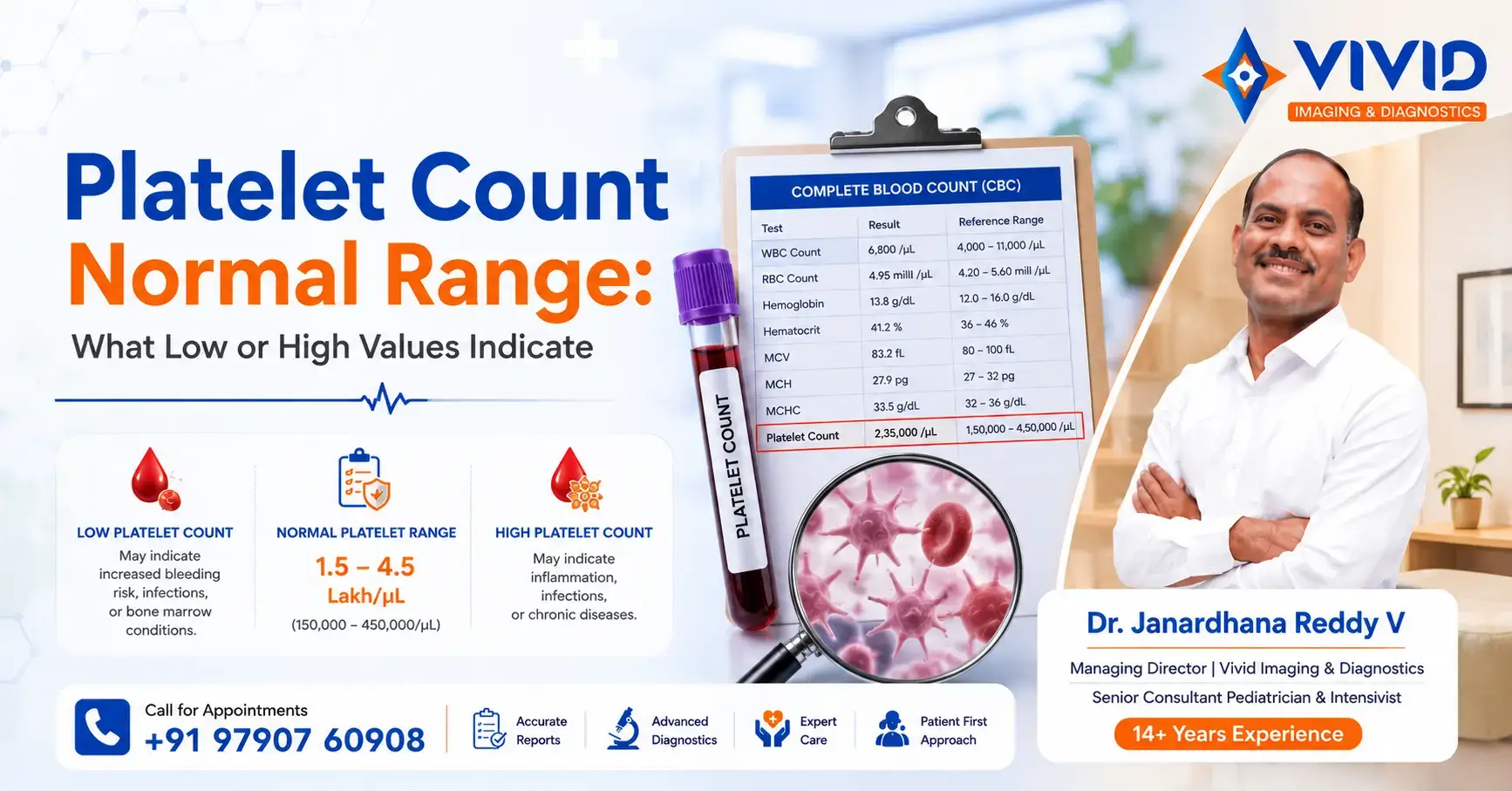
Table of Contents
- What Are Platelets?
- Platelet Count Normal Range Explained
- Why Is Platelet Count Important?
- Symptoms of Low Platelet Count
- What Causes Low Platelet Count?
- Symptoms of High Platelet Count
- What Causes High Platelet Count?
- Low vs High Platelet Count: Key Differences
- When Should You Get Your Platelet Count Checked?
- Which Tests Measure Platelet Count?
- How Are Abnormal Platelet Counts Treated?
- Why Choose Vivid Diagnostics?
- Frequently Asked Questions
- Conclusion
Understanding your platelet count is an important part of monitoring your overall health. When reviewing a Complete Blood Count (CBC) report, many people focus on hemoglobin and white blood cells but overlook platelets, which play a critical role in blood clotting and healing.
An abnormal platelet count can sometimes indicate infections, nutritional deficiencies, inflammatory conditions, bleeding disorders, or other underlying health concerns. Knowing the platelet count normal range and understanding what low or high values indicate can help you take timely action and seek appropriate medical advice.
What Are Platelets?
Platelets, also known as thrombocytes, are tiny blood cells produced in the bone marrow. Their primary function is to help stop bleeding by forming blood clots when blood vessels are injured.
Whenever you experience a cut or injury, platelets gather at the affected site and work together to prevent excessive blood loss.
Functions of Platelets
Platelets help:
- Control bleeding
- Form blood clots
- Support wound healing
- Repair damaged blood vessels
- Maintain healthy circulation
Without adequate platelet levels, the body may struggle to stop bleeding effectively.
Platelet Count Normal Range Explained
The platelet count normal range for most healthy adults is:
| Platelet Count | Interpretation |
| 150,000 to 450,000 platelets per microliter (mcL) | Normal Range |
| Below 150,000 platelets/mcL | Low Platelet Count (Thrombocytopenia) |
| Above 450,000 platelets/mcL | High Platelet Count (Thrombocytosis) |
While slight variations may occur between laboratories, values significantly outside the normal range should be evaluated by a healthcare professional.
Does Platelet Count Vary With Age?
Yes. Platelet counts may vary slightly based on:
- Age
- Pregnancy
- Recent infections
- Medical conditions
- Certain medications
Your doctor will interpret the results based on your overall health and medical history.
Why Is Platelet Count Important?
Maintaining a platelet count within the normal range is essential because both low and high platelet counts can affect the body’s ability to regulate blood clotting properly.
Abnormal platelet levels may increase the risk of:
- Excessive bleeding
- Easy bruising
- Blood clot formation
- Stroke risk in certain conditions
- Delayed wound healing
This is why platelet count is routinely measured as part of a Complete Blood Count (CBC) test.
Symptoms of Low Platelet Count
A low platelet count occurs when platelet levels fall below the platelet count normal range.
Some individuals may not experience symptoms initially, while others may develop noticeable warning signs.
Easy Bruising
People with low platelets often bruise easily, even after minor injuries.
Frequent Nosebleeds
Unexpected or recurrent nosebleeds can occur when platelet levels are too low.
Bleeding Gums
Bleeding while brushing or flossing may indicate low platelet levels.
Tiny Red or Purple Spots on the Skin
Known as petechiae, these small spots may appear due to bleeding under the skin.
Heavy Menstrual Bleeding
Women with thrombocytopenia may experience unusually heavy periods.
Prolonged Bleeding From Cuts
Minor cuts may take longer than usual to stop bleeding.
Fatigue and Weakness
Underlying conditions affecting platelet production can also cause fatigue.
What Causes Low Platelet Count?
Several medical conditions can lead to platelet counts below the normal range.
Viral Infections
Certain viral infections can temporarily reduce platelet production.
Dengue Fever
Dengue is one of the most common causes of low platelet count in India and often requires close monitoring.
Vitamin B12 Deficiency
Nutritional deficiencies can interfere with healthy blood cell production.
Bone Marrow Disorders
Conditions affecting the bone marrow may reduce platelet production.
Autoimmune Diseases
Some autoimmune disorders mistakenly attack and destroy platelets.
Certain Medications
Certain medications may lower platelet levels as a side effect.
Symptoms of High Platelet Count
A high platelet count occurs when platelet levels exceed the platelet count normal range.
In many cases, individuals may not notice symptoms, especially if the elevation is mild.
Headaches
Frequent headaches can sometimes be associated with elevated platelet levels.
Dizziness
High platelet counts may occasionally affect blood circulation.
Chest Pain
In rare cases, excessive clot formation can contribute to chest discomfort.
Tingling in Hands and Feet
Abnormal blood flow may cause numbness or tingling sensations.
Vision Changes
Some individuals experience temporary visual disturbances.
Blood Clots
Severely elevated platelet counts may increase the risk of clot formation.
What Causes High Platelet Count?
Infections
The body may temporarily increase platelet production while fighting infection.
Chronic Inflammatory Diseases
Conditions such as rheumatoid arthritis can elevate platelet levels.
Iron Deficiency Anemia
Iron deficiency can sometimes cause reactive thrombocytosis.
Recent Surgery or Trauma
The body may produce additional platelets during recovery.
Splenectomy
Removal of the spleen may result in higher platelet counts.
Bone Marrow Disorders
Certain blood disorders can cause excessive platelet production.
Low vs High Platelet Count: Key Differences
| Low Platelet Count | High Platelet Count |
| Increased bleeding risk | Increased clotting risk |
| Easy bruising | Headaches |
| Nosebleeds | Dizziness |
| Bleeding gums | Tingling sensations |
| Heavy periods | Possible blood clots |
| Delayed clot formation | Excessive clot formation |
Understanding whether your platelet count is above or below the normal range is important for determining the next steps.
When Should You Get Your Platelet Count Checked?
You should consider a platelet count test if you experience:
- Frequent bruising
- Recurrent nosebleeds
- Bleeding gums
- Heavy menstrual bleeding
- Unexplained fatigue
- Recent viral infections
- Dengue symptoms
- Family history of blood disorders
Seek Immediate Medical Attention If You Experience:
- Severe bleeding
- Blood in urine or stool
- Sudden chest pain
- Difficulty breathing
- Signs of stroke
- Severe weakness
Which Tests Measure Platelet Count?
Complete Blood Count (CBC)
A CBC test is the most common way to measure platelet levels and assess overall blood health.
Peripheral Blood Smear
This test allows microscopic examination of blood cells.
Platelet Function Tests
Used when platelet-related disorders are suspected.
Bone Marrow Evaluation
Recommended in specific cases where bone marrow disorders are suspected.
How Are Abnormal Platelet Counts Treated?
Treatment depends on the underlying cause rather than the platelet count itself.
Possible approaches include:
Treating Underlying Infections
Many temporary platelet abnormalities improve once infections resolve.
Correcting Nutritional Deficiencies
Vitamin B12, folate, or iron supplementation may be recommended.
Medication Adjustments
Doctors may review medications that affect platelet levels.
Managing Chronic Diseases
Long-term conditions may require specialized treatment plans.
Monitoring Platelet Levels
Repeat blood testing may be advised to track changes over time.
Why Choose Vivid Diagnostics for Platelet Count Testing?
At Vivid Diagnostics, we provide accurate and reliable blood testing services to help patients better understand their CBC reports and platelet count results.
Our diagnostic services include:
- Complete Blood Count (CBC)
- Platelet Count Testing
- Dengue Testing
- Peripheral Smear Examination
- Infection Screening Tests
- Comprehensive Health Checkups
Using advanced laboratory technology and quality-focused reporting standards, Vivid Diagnostics helps patients and healthcare providers make informed healthcare decisions with confidence.
Whether you are concerned about a low platelet count, high platelet count, or simply want to monitor your health, our diagnostic experts are committed to delivering accurate results and dependable service.
Frequently Asked Questions About Platelet Count Normal Range
What is the normal platelet count range?
The normal platelet count range for most adults is between 150,000 and 450,000 platelets per microliter of blood.
Is a low platelet count always dangerous?
Not necessarily. Mild reductions may be temporary, but significantly low platelet counts require medical evaluation.
Can dengue reduce platelet count?
Yes. Dengue fever commonly causes a drop in platelet levels and often requires regular monitoring.
Can stress affect platelet count?
Severe physical stress, illness, and inflammation can sometimes influence platelet levels.
Which test checks platelet count?
A Complete Blood Count (CBC) is the most commonly used test for measuring platelet levels.
How often should platelet count be checked?
Testing frequency depends on symptoms, medical history, and recommendations from your healthcare provider.
Conclusion
Understanding the platelet count normal range is essential for interpreting your CBC report and maintaining good health. Platelets play a critical role in blood clotting, and both low and high platelet counts can indicate underlying health conditions that may require medical attention.
If you experience unusual bruising, bleeding, recurrent infections, or abnormal blood test results, timely testing can help identify the cause and guide appropriate treatment.
At Vivid Diagnostics, we offer comprehensive blood testing services, including CBC and platelet count analysis, to help you gain accurate insights into your health and take the right next steps toward better well-being.