
 MRI Scan
 CT Scan
 Health Checkups
 Ultrasound
 Lab Tests
 2D Echo
 ECG
ECG EEG
EEG ENMG/NCV
 Health Screening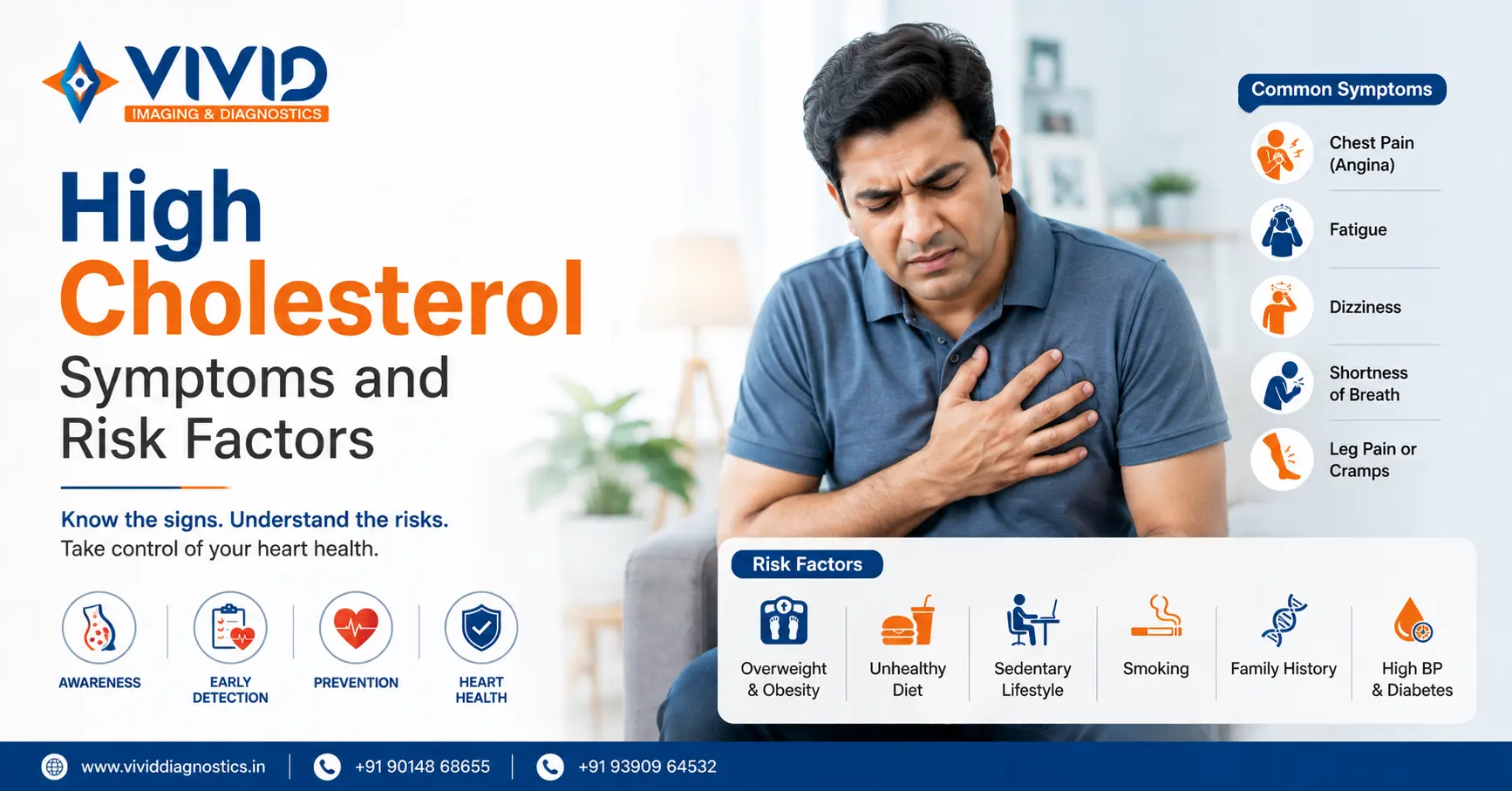
High cholesterol is a common health concern that can affect people of all ages. One of the biggest challenges is that high cholesterol symptoms are often difficult to notice because high cholesterol usually does not cause obvious symptoms in its early stages. Many people discover they have elevated cholesterol only after a routine blood test or a health checkup.
Over time, untreated high cholesterol can contribute to the buildup of plaque inside the arteries, increasing the risk of heart disease, heart attack, and stroke.
Understanding the high cholesterol symptoms, risk factors, causes, and screening options can help you take action before complications develop.
Important: High cholesterol itself usually does not cause noticeable symptoms. A lipid profile blood test is one of the main ways to identify abnormal cholesterol levels.
Table of Contents
- What Is High Cholesterol?
- What Are the Symptoms of High Cholesterol?
- Why Doesn’t High Cholesterol Cause Symptoms?
- What Are the Risk Factors for High Cholesterol?
- What Causes High Cholesterol?
- What Happens If High Cholesterol Is Left Untreated?
- Who Should Get a Cholesterol Test?
- What Tests Check Cholesterol Levels?
- How Can You Lower High Cholesterol?
- When Should You See a Doctor?
- Frequently Asked Questions
- Conclusion
What Is High Cholesterol?
Cholesterol is a waxy, fat-like substance that your body needs to build cells, produce certain hormones, and perform other important functions.
Your body makes cholesterol naturally, and you also get some cholesterol from food. Cholesterol travels through the bloodstream with the help of proteins called lipoproteins.
The two commonly discussed types are:
- LDL cholesterol: Often called “bad cholesterol.” High LDL levels can contribute to plaque buildup in the arteries.
- HDL cholesterol: Often called “good cholesterol.” HDL helps transport cholesterol away from the bloodstream toward the liver for removal.
- Triglycerides: These are another type of fat in the blood. High triglycerides can also increase cardiovascular risk, particularly when combined with other risk factors.
A lipid profile typically measures total cholesterol, LDL cholesterol, HDL cholesterol, and triglycerides.
What Are the Symptoms of High Cholesterol?
The most important thing to understand about high cholesterol symptoms is that high cholesterol usually has no symptoms.
You can have elevated LDL cholesterol and feel completely healthy. You may exercise regularly, eat reasonably well, and have no pain or discomfort, yet still have high cholesterol.
This is why high cholesterol is sometimes called a “silent” risk factor for cardiovascular disease.
Possible Signs of Advanced Cholesterol-Related Disease
Although high cholesterol itself generally does not produce symptoms, cholesterol buildup can contribute to artery disease. Depending on which arteries are affected, symptoms may eventually appear.
These can include:
- Chest pain or pressure, particularly with exertion
- Shortness of breath
- Pain or discomfort in the legs while walking
- Sudden weakness or numbness
- Difficulty speaking
- Sudden vision problems
These symptoms can indicate serious cardiovascular or vascular problems and should not be ignored.
Do not wait for symptoms before checking your cholesterol. A person can have high cholesterol without feeling unwell.
Why Doesn’t High Cholesterol Cause Symptoms?
Cholesterol circulates through the blood and gradually contributes to plaque formation inside artery walls. This process can happen over many years without producing noticeable symptoms.
As plaque builds up, arteries can become narrower or less flexible. In some cases, a plaque can rupture and contribute to the formation of a blood clot.
If blood flow to the heart or brain becomes blocked, it can result in a heart attack or stroke.
This is why early detection of high cholesterol is important even when you feel healthy.
What Are the Risk Factors for High Cholesterol?
Several lifestyle, medical, genetic, and age-related factors can increase your likelihood of developing high cholesterol.
1. Unhealthy Diet
A diet high in saturated fats and trans fats can contribute to elevated LDL cholesterol.
Foods that may contribute to an unhealthy cholesterol profile when consumed frequently include:
- Fatty or processed meats
- Fried foods
- Full-fat dairy products
- Commercial baked foods containing unhealthy fats
- Highly processed foods
A balanced diet containing vegetables, fruits, whole grains, legumes, nuts, and healthier sources of fat can support heart health.
2. Lack of Physical Activity
Regular physical activity can help improve cholesterol levels and support healthy body weight.
A sedentary lifestyle may contribute to higher LDL cholesterol, lower HDL cholesterol, weight gain, and other cardiovascular risk factors.
3. Being Overweight or Having Obesity
Excess body weight can be associated with unfavorable cholesterol and triglyceride levels.
Even modest improvements in weight, when appropriate, may improve several cardiovascular risk factors.
4. Smoking
Smoking damages blood vessels and can contribute to cardiovascular disease. It can also negatively affect HDL cholesterol.
Quitting smoking is an important step toward protecting your heart and blood vessels.
5. Diabetes
Diabetes can be associated with an increased risk of cardiovascular disease and abnormal lipid levels.
People with diabetes may have a pattern of high triglycerides, lower HDL cholesterol, and other lipid abnormalities.
6. High Blood Pressure
High blood pressure and high cholesterol can occur together and significantly increase cardiovascular risk.
Both conditions can damage blood vessels over time, making regular screening important.
7. Family History
Genetics can influence cholesterol levels.
Some people inherit conditions such as familial hypercholesterolemia (FH), which can cause very high LDL cholesterol from a young age.
If close family members have had very high cholesterol or early heart disease, discuss your risk with a healthcare professional.
8. Age
Cholesterol levels can change as people get older. However, high cholesterol is not exclusively an older person’s problem.
Younger adults can also have elevated cholesterol because of genetics, lifestyle factors, certain medical conditions, or medications.
9. Certain Medical Conditions
Some health conditions can affect cholesterol levels, including:
- Diabetes
- Kidney disease
- Liver disease
- Hypothyroidism
- Certain metabolic conditions
Treating an underlying condition may be an important part of managing abnormal cholesterol.
10. Certain Medications
Some medicines can affect lipid levels. If you are taking long-term medication and notice abnormal cholesterol results, speak with your doctor rather than stopping medication on your own.
What Causes High Cholesterol?
High cholesterol can result from a combination of factors rather than one single cause.
Common contributors include:
Lifestyle factors:
Poor diet, physical inactivity, smoking, and excess weight.
Genetic factors:
Inherited conditions can cause unusually high cholesterol even in people who follow a healthy lifestyle.
Medical conditions:
Diabetes, hypothyroidism, kidney disease, and other conditions can influence cholesterol.
Age and hormonal changes:
Cholesterol levels can change throughout life.
For many people, high cholesterol is the result of several factors working together.
What Happens If High Cholesterol Is Left Untreated?
Persistently high LDL cholesterol can contribute to the formation of plaque in the arteries, a process known as atherosclerosis.
Over time, this may increase the risk of:
- Coronary artery disease
- Heart attack
- Stroke
- Peripheral artery disease
- Other cardiovascular complications
The important point is that these complications may develop without obvious high cholesterol symptoms beforehand.
That is why prevention and regular screening are so important.
Who Should Get a Cholesterol Test?
A healthcare professional can help determine how frequently you should have your cholesterol checked based on your age, medical history, family history, and cardiovascular risk factors.
Testing may be particularly important if you:
- Have diabetes or high blood pressure
- Have a family history of high cholesterol or early heart disease
- Smoke
- Are overweight or have obesity
- Have an inactive lifestyle
- Have previously had abnormal cholesterol results
- Have known cardiovascular disease
Children and younger adults may also need cholesterol screening in certain circumstances, particularly when there is a strong family history or other risk factors.
What Tests Check Cholesterol Levels?
The primary blood test used to evaluate cholesterol is a lipid profile, also called a lipid panel.
It generally measures:
| Test | What It Indicates |
|---|---|
| Total Cholesterol | Overall amount of cholesterol in the blood |
| LDL Cholesterol | A major cholesterol-related cardiovascular risk marker |
| HDL Cholesterol | Helps transport cholesterol back toward the liver |
| Triglycerides | Measures another important type of blood fat |
Your doctor may interpret these values alongside your age, blood pressure, diabetes status, smoking history, family history, and other cardiovascular risk factors.
One cholesterol number does not tell the whole story. Your overall cardiovascular risk matters.
How Can You Lower High Cholesterol?
Depending on your cholesterol levels and overall cardiovascular risk, your healthcare professional may recommend lifestyle changes, medication, or both.
Focus on Heart-Healthy Food
Choose more:
- Vegetables and fruits
- Whole grains
- Beans and lentils
- Nuts and seeds
- Fish and other healthier protein sources
- Sources of unsaturated fats
Limit foods high in saturated and trans fats.
Stay Physically Active
Regular physical activity can support healthy cholesterol levels, cardiovascular fitness, and weight management.
Choose activities you can maintain consistently, such as walking, cycling, swimming, or other forms of exercise appropriate for your fitness level.
Avoid Smoking
If you smoke, quitting can significantly benefit your cardiovascular health.
Maintain a Healthy Weight
If you are overweight, gradual and sustainable weight management may improve cholesterol and other cardiovascular risk factors.
Take Prescribed Medication Correctly
Some people need cholesterol-lowering medication, particularly when LDL cholesterol is very high or their overall cardiovascular risk is elevated.
Do not start, stop, or change cholesterol medication without discussing it with your healthcare professional.
When Should You See a Doctor?
Because high cholesterol symptoms are usually absent, you should not wait for symptoms before getting tested.
Consider speaking with a healthcare professional if:
- You have been told your cholesterol is high.
- You have a strong family history of high cholesterol.
- You have diabetes or high blood pressure.
- You have multiple cardiovascular risk factors.
- You have previously had an abnormal lipid profile.
- You are concerned about your heart health.
Seek urgent medical attention if you experience symptoms such as severe or persistent chest pain, sudden weakness or numbness, difficulty speaking, or other possible signs of a heart attack or stroke.
Frequently Asked Questions About High Cholesterol Symptoms
1. What are the first symptoms of high cholesterol?
There are usually no early symptoms of high cholesterol. Most people do not feel any different even when their LDL cholesterol is elevated. A blood test is needed to identify abnormal cholesterol levels.
2. Can high cholesterol cause headaches?
High cholesterol itself generally does not cause headaches. If you have persistent or severe headaches, discuss them with a healthcare professional rather than assuming they are caused by cholesterol.
3. Can young adults have high cholesterol?
Yes. High cholesterol can occur in young adults due to genetics, diet, inactivity, obesity, certain medical conditions, or other factors. Familial hypercholesterolemia can cause particularly high LDL levels at a young age.
4. Can you have high cholesterol and feel healthy?
Yes. This is very common. A person can have high cholesterol without any noticeable symptoms, which is why appropriate screening is important.
5. How is high cholesterol diagnosed?
High cholesterol is generally identified through a blood test called a lipid profile or lipid panel. Your healthcare professional interprets the results in the context of your overall cardiovascular risk.
6. Can high cholesterol be reduced naturally?
Lifestyle changes such as eating a heart-healthy diet, exercising regularly, maintaining a healthy weight, and avoiding smoking can improve cholesterol levels. Some people, however, may also require medication depending on their individual risk.
Conclusion
Understanding high cholesterol symptoms starts with knowing that there may be no symptoms at all. High cholesterol can develop silently while contributing to plaque buildup in the arteries over time.
The good news is that cholesterol can be measured through a simple blood test, and many risk factors can be addressed through healthy lifestyle choices and appropriate medical care.
If you have risk factors such as diabetes, high blood pressure, smoking, obesity, a family history of high cholesterol, or previous abnormal cholesterol results, talk to a healthcare professional about whether you should have a lipid profile.
Don’t wait for symptoms to take care of your heart health. Regular screening and early action can make a meaningful difference.
Get Your Cholesterol Checked
Looking for reliable diagnostic testing in Hyderabad?
VIVID Imaging & Diagnostics provides diagnostic services and health screening to help you stay informed about your health.
🌐 Website: vividdiagnostics.in
📞 Call: +91 90148 68655 | +91 93909 64532
Book your diagnostic test today and take a proactive step toward better heart health.