
 MRI Scan
 CT Scan
 Health Checkups
 Ultrasound
 Lab Tests
 2D Echo
 ECG
ECG EEG
EEG ENMG/NCV
 Health Screening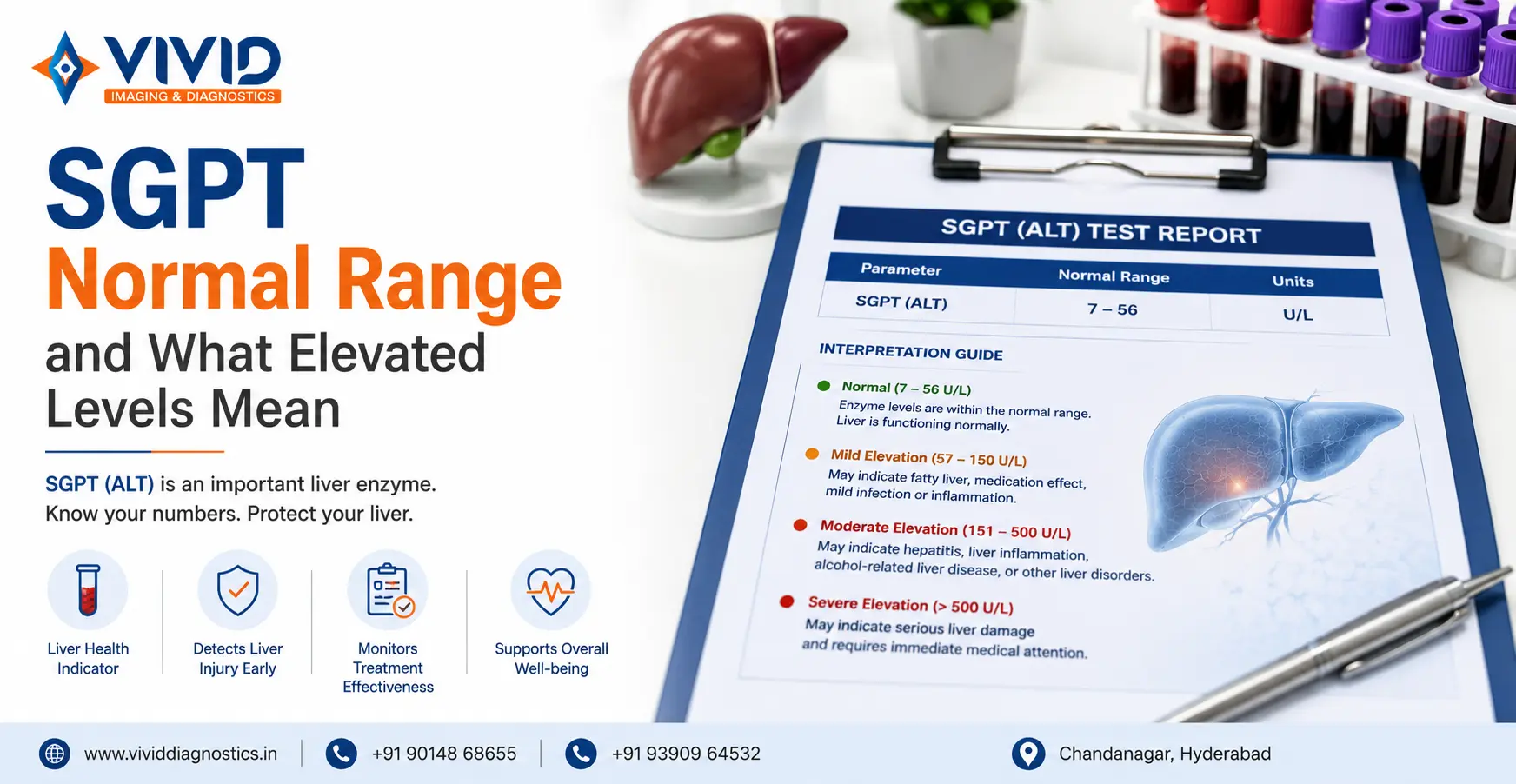
If you’ve recently received a liver blood test report and noticed a value called SGPT, you may be wondering whether your result is normal. SGPT is a commonly used name for alanine aminotransferase (ALT), an enzyme found primarily in the liver.
An SGPT test is often included as part of a Liver Function Test (LFT). When liver cells are irritated or damaged, SGPT can leak into the bloodstream, causing the blood level to rise. However, an elevated result does not automatically mean that you have serious liver disease.
Understanding the SGPT Normal Range, what can cause elevated levels, and when further evaluation may be necessary can help you make sense of your laboratory report without unnecessary worry.
Important: Laboratory reference ranges can vary depending on the testing method, laboratory, age, sex, and other factors. Always interpret your result using the reference range printed on your own laboratory report and discuss abnormal results with a qualified healthcare professional.
Table of Contents
- What Is SGPT?
- What Is the SGPT Test Used For?
- SGPT Normal Range
- What Does a High SGPT Level Mean?
- Common Causes of Elevated SGPT
- Can Fatty Liver Increase SGPT?
- Does Alcohol Affect SGPT?
- Can Medicines Increase SGPT?
- What Are the Symptoms of High SGPT?
- What Happens If SGPT Is Slightly Elevated?
- When Is a High SGPT Level Concerning?
- How Is SGPT Tested?
- How Can You Support Healthy Liver Enzymes?
- Frequently Asked Questions
- Conclusion
What Is SGPT?
SGPT, or serum glutamic-pyruvic transaminase, is an older name for alanine aminotransferase (ALT).
ALT is an enzyme found predominantly in liver cells. Under normal circumstances, only a small amount enters the bloodstream. When liver cells become irritated or injured, more ALT can be released into the blood.
For this reason, doctors commonly use ALT/SGPT as one of the markers when evaluating possible liver injury.
However, SGPT is not a standalone diagnosis. A healthcare professional may consider it alongside other results such as AST, ALP, GGT, bilirubin, albumin, medical history, symptoms, and sometimes imaging.
What Is the SGPT Test Used For?
An SGPT test may be ordered for several reasons.
To evaluate possible liver problems
Doctors may recommend the test when a person has symptoms that could be related to the liver, such as:
- Yellowing of the skin or eyes
- Dark urine
- Unexplained fatigue
- Loss of appetite
- Nausea
- Abdominal discomfort
- Unexplained weight loss
To monitor an existing condition
People with known liver conditions may require periodic liver enzyme testing to monitor changes over time.
To monitor certain medications
Some medicines can affect liver enzymes. Your doctor may recommend periodic blood tests depending on the medication and your individual risk.
As part of a health checkup
An SGPT test may be included in a broader liver function panel, particularly when there are risk factors for liver disease.
SGPT Normal Range
One of the most searched questions after receiving a liver blood test is: “What is the SGPT Normal Range?”
There isn’t one universal number that applies to every laboratory.
ALT/SGPT reference ranges can vary according to:
- Laboratory testing methods
- Equipment used
- Age
- Sex
- Population
- Laboratory-specific reference standards
For this reason, the reference range printed on your laboratory report should be used when interpreting your result.
As a general guide, many laboratories use an ALT reference range somewhere around 7–55 U/L, but this is not a universal standard. Some laboratories use different upper limits.
Why does the reference range matter?
Suppose your report shows:
SGPT: 48 U/L
If your laboratory’s upper reference limit is 55 U/L, the result may fall within that laboratory’s reference range.
But if another laboratory uses a lower upper limit, the same number could be flagged as elevated.
This is why comparing your result with random numbers found online can sometimes create unnecessary anxiety.
Always look at the reference interval printed beside your result.
What Does a High SGPT Level Mean?
A high SGPT level generally indicates that liver cells may be experiencing some form of injury or stress.
However, the number alone does not tell you the exact cause.
An elevated result may occur because of:
- Fatty liver disease
- Viral hepatitis
- Alcohol-related liver injury
- Certain medications
- Some herbal or dietary supplements
- Obesity and metabolic health problems
- Strenuous physical activity
- Other liver conditions
The degree and persistence of the elevation are important.
A mildly elevated result may have a very different significance from a dramatically elevated result.
Your doctor may therefore recommend repeating the test, reviewing medications, performing additional blood tests, or obtaining imaging depending on the overall picture.
Common Causes of Elevated SGPT
1. Fatty Liver Disease
Fatty liver is one of the common reasons for elevated liver enzymes.
It can be associated with:
- Excess body weight
- Insulin resistance
- Type 2 diabetes
- High triglycerides
- High cholesterol
- Physical inactivity
Lifestyle changes and appropriate medical management can help reduce the risk of liver-related complications.
2. Viral Hepatitis
Certain viral infections, including hepatitis B and hepatitis C, can cause liver inflammation and increased ALT/SGPT.
Additional blood tests are needed to determine whether a viral infection is responsible.
3. Alcohol Consumption
Regular or excessive alcohol consumption can damage liver cells and cause liver enzymes to rise.
If your liver enzymes are elevated, tell your healthcare professional honestly about your alcohol intake. This information can help them interpret your results more accurately.
4. Medicines
Some prescription medicines and over-the-counter products can affect liver enzymes.
Never stop a prescribed medication simply because your SGPT is elevated. Instead, discuss the result with the doctor who prescribed the medicine.
5. Herbal and Dietary Supplements
“Natural” does not always mean risk-free.
Certain herbal products and supplements can affect the liver. If you use supplements, inform your doctor when discussing abnormal liver test results.
6. Intense Exercise
Heavy or unusually strenuous exercise can sometimes affect liver-related blood test results, particularly when muscle injury is also involved.
Your healthcare professional can consider recent physical activity when interpreting your results.
Can Fatty Liver Increase SGPT?
Yes. Fatty liver can be associated with elevated ALT/SGPT.
However, not everyone with fatty liver has elevated liver enzymes. A person can have fatty liver even when ALT is within the laboratory reference range.
If fatty liver is suspected, your doctor may consider factors such as:
- Weight
- Blood sugar
- Cholesterol and triglycerides
- Blood pressure
- Alcohol intake
- Liver enzyme results
- Medical history
Imaging, such as an abdominal ultrasound, may also be recommended in appropriate situations.
Does Alcohol Affect SGPT?
Alcohol can affect liver health and may contribute to elevated liver enzymes.
The effect varies from person to person and depends on factors such as the amount and frequency of alcohol consumption, underlying liver health, medications, and other risk factors.
If your liver enzymes are abnormal, discuss your alcohol consumption openly with your healthcare professional. Accurate information helps them evaluate possible causes.
Can Medicines Increase SGPT?
Yes. Certain medicines can cause elevations in liver enzymes.
This does not mean that every person taking these medicines will develop liver injury.
If your SGPT increases while taking medication, your doctor may review:
- The medication and dose
- How long you’ve been taking it
- Other medicines you use
- Supplements or herbal products
- Other liver test results
- Your symptoms
Do not discontinue prescribed medication without medical advice.
What Are the Symptoms of High SGPT?
An important point is that high SGPT itself does not usually cause symptoms.
Instead, symptoms may occur because of the underlying condition causing the liver enzyme elevation.
Possible symptoms of a liver-related condition can include:
- Fatigue
- Loss of appetite
- Nausea
- Abdominal discomfort
- Dark urine
- Pale stools
- Itching
- Yellowing of the skin or eyes
Some people with elevated liver enzymes may have no symptoms at all.
This is one reason routine health testing can sometimes identify liver abnormalities before a person feels unwell.
What Happens If SGPT Is Slightly Elevated?
A slightly elevated SGPT does not necessarily mean that you have serious liver disease.
There are many possible explanations, including temporary changes, medications, metabolic factors, alcohol consumption, or recent strenuous exercise.
Your doctor may recommend:
- Reviewing your medical history
- Checking other liver enzymes
- Reviewing medications and supplements
- Assessing metabolic risk factors
- Repeating the test after an appropriate interval
- Ordering additional tests if needed
The most important thing is not to interpret one laboratory value in isolation.
When Is a High SGPT Level Concerning?
The significance of an elevated SGPT depends on how high it is, whether it remains elevated, and whether other liver tests are also abnormal.
A doctor may be particularly concerned when:
- ALT is substantially elevated
- The elevation persists over time
- Bilirubin is also elevated
- Other liver enzymes are abnormal
- You have symptoms of liver disease
- There is a history of hepatitis
- You have significant alcohol exposure
- You take medications known to affect the liver
Very high liver enzyme levels require timely medical assessment, particularly if accompanied by symptoms such as jaundice, severe abdominal pain, persistent vomiting, confusion, or marked weakness.
How Is SGPT Tested?
The SGPT/ALT test is performed using a blood sample.
A healthcare professional collects a small amount of blood, usually from a vein in your arm. The sample is then analyzed in a diagnostic laboratory.
The collection itself generally takes only a few minutes.
Do You Need to Fast?
Fasting requirements depend on the complete set of tests your doctor has ordered.
An ALT test alone may not always require fasting. However, if it is being performed together with tests such as a lipid profile or glucose testing, fasting may be recommended.
Follow the preparation instructions provided by your healthcare provider or diagnostic laboratory.
How Can You Support Healthy Liver Enzymes?
There is no single “liver detox” that can guarantee healthy liver function. Instead, focus on sustainable habits.
Maintain a healthy weight
If you are overweight, gradual and sustainable weight management can support metabolic and liver health.
Eat a balanced diet
Prioritize:
- Vegetables
- Fruits
- Whole grains
- Pulses and legumes
- Lean protein sources
- Healthy fats
Limit excessive intake of highly processed foods and added sugars.
Exercise regularly
Regular physical activity supports metabolic health and can be beneficial for people at risk of fatty liver.
Limit alcohol
Excessive alcohol consumption can damage the liver. If your liver enzymes are elevated, discuss your alcohol intake with your doctor.
Use medicines responsibly
Take medicines exactly as prescribed and inform your healthcare provider about supplements and herbal products.
Manage diabetes and cholesterol
High blood sugar, high triglycerides, obesity, and other metabolic risk factors can be associated with fatty liver and abnormal liver enzymes.
Frequently Asked Questions About SGPT
What is SGPT?
SGPT is an older term for alanine aminotransferase (ALT), an enzyme found predominantly in liver cells. It is commonly measured as part of liver blood testing.
Is SGPT the same as ALT?
Yes. SGPT and ALT generally refer to the same enzyme. ALT is the more commonly used modern medical term.
What is considered a normal SGPT level?
The SGPT Normal Range varies between laboratories. Many laboratories use an ALT range somewhere around 7–55 U/L, but your own laboratory’s reference interval should be used for interpretation.
Is SGPT 50 dangerous?
Not necessarily. Whether a value of 50 U/L is considered elevated depends on your laboratory’s reference range and your individual circumstances. A doctor should interpret the result alongside your other tests and medical history.
Can high SGPT be cured?
An elevated SGPT is a laboratory finding rather than a disease itself. Treatment depends on the underlying cause. Addressing the cause may allow the enzyme level to return toward the laboratory reference range.
Can fatty liver cause high SGPT?
Yes. Fatty liver can cause elevated ALT/SGPT, although some people with fatty liver may have normal liver enzymes.
Should I worry about a mildly elevated SGPT?
A mild elevation does not automatically mean serious liver disease. However, it should not simply be ignored. Your doctor may investigate possible causes or repeat the test.
Conclusion
Understanding the SGPT Normal Range can make your liver test report much easier to interpret, but remember that there is no single number that defines “normal” for everyone.
SGPT, also known as ALT, is a useful marker of possible liver cell injury. Elevated levels can occur because of fatty liver, viral hepatitis, alcohol, medications, supplements, metabolic conditions, and several other causes.
Most importantly, one abnormal SGPT result does not provide a diagnosis. Your healthcare professional will consider the result alongside other liver tests, symptoms, medical history, medications, and risk factors.
If your SGPT is elevated, don’t panic—but don’t ignore it either. Understanding the possible causes and getting appropriate medical advice is the best way to protect your liver health.
Get Your Liver Tests Done at VIVID Imaging & Diagnostics
If your doctor has recommended an SGPT, ALT, or complete Liver Function Test, timely diagnostic testing can provide useful information about your liver health.
VIVID Imaging & Diagnostics provides diagnostic services to help you stay informed about your health.
🌐 Website: https://vividdiagnostics.in/
📞 Call Us: +91 90148 68655 | +91 93909 64532
Book your diagnostic test today and take a proactive step toward better health.
Medical disclaimer: This article is intended for general educational purposes and does not replace consultation, diagnosis, or treatment from a qualified healthcare professional.