
 MRI Scan
 CT Scan
 Health Checkups
 Ultrasound
 Lab Tests
 2D Echo
 ECG
ECG EEG
EEG ENMG/NCV
 Health Screening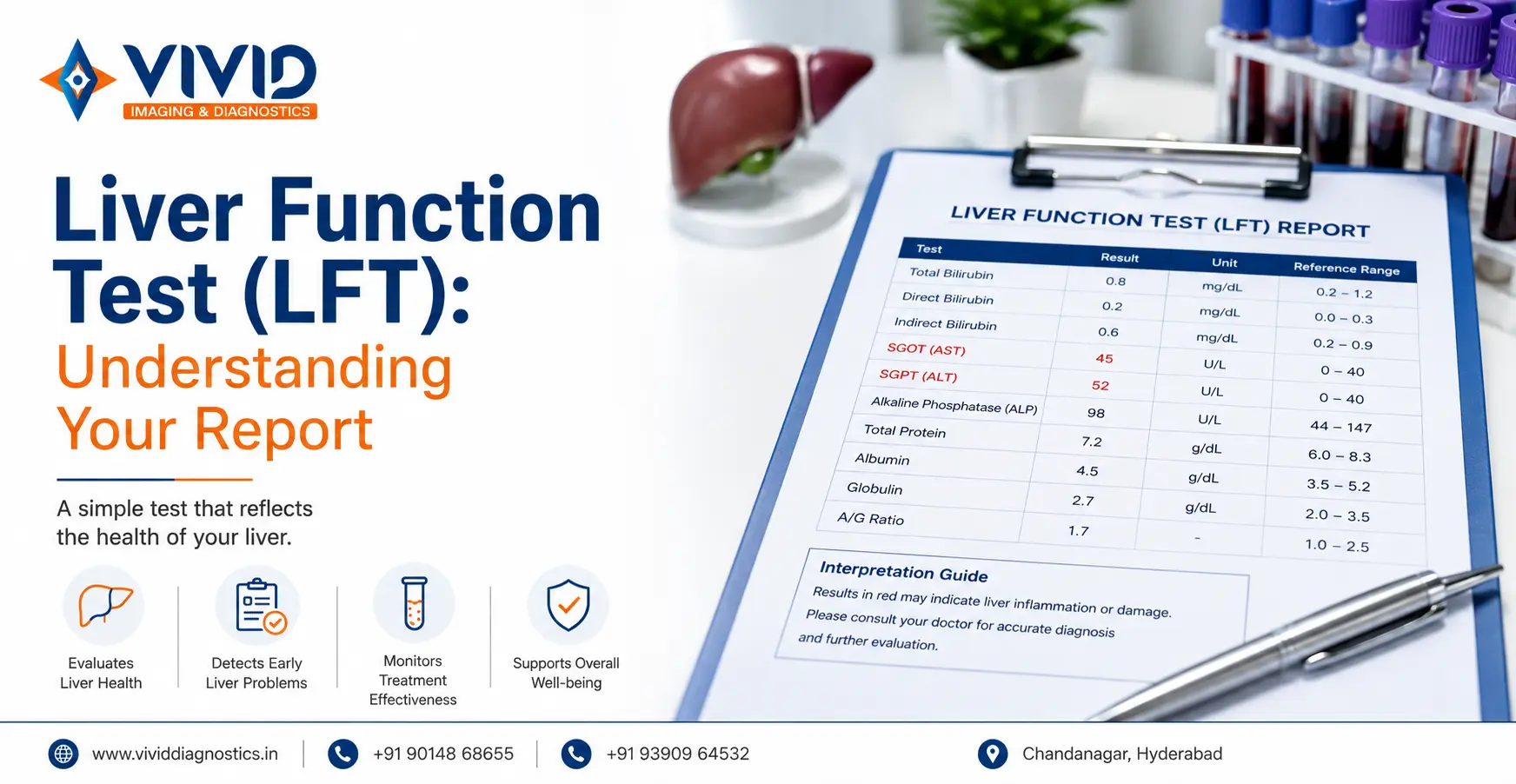
The liver is one of the body’s most important organs. It helps process nutrients, remove waste products from the blood, produce bile for digestion, store energy, and support many essential metabolic functions. But how do you know whether your liver is working properly?
A Liver Function Test (LFT) is a group of blood tests used to assess liver health and detect signs of liver injury or other problems affecting the liver.
If you have recently received an LFT report, seeing terms such as ALT, AST, ALP, bilirubin, albumin, and GGT can feel confusing. What do these numbers mean? What is a normal LFT result? And does an abnormal result always mean you have liver disease?
This guide explains the Liver Function Test, its components, normal ranges, possible causes of abnormal results, and when you should discuss your report with a doctor.
Medical note: Reference ranges can vary between laboratories, testing methods, age groups, and individuals. Your LFT results should always be interpreted along with your symptoms, medical history, medications, and other investigations.
Table of Contents
- What Is a Liver Function Test?
- Why Is a Liver Function Test Done?
- What Does an LFT Measure?
- Understanding Your Liver Function Test Report
- LFT Normal Range
- What Does High ALT Mean?
- What Does High AST Mean?
- What Does High ALP Mean?
- What Does High Bilirubin Mean?
- What Does High GGT Mean?
- What Do Albumin and Total Protein Tell You?
- What Can Cause Abnormal LFT Results?
- Does an Abnormal LFT Always Mean Liver Disease?
- How Is a Liver Function Test Performed?
- Is Fasting Required for an LFT?
- How Can You Support Liver Health?
- When Should You See a Doctor?
- Frequently Asked Questions
- Conclusion
What Is a Liver Function Test?
A Liver Function Test (LFT) is a blood test panel that measures several substances in your blood associated with liver health.
Despite the name, an LFT does not measure one single “liver function.” Instead, it looks at different enzymes, proteins, and substances that can provide clues about:
- Liver cell injury
- Bile flow
- The liver’s ability to produce certain proteins
- Processing and removal of bilirubin
- Other conditions that may affect liver health
Doctors may recommend an LFT as part of a routine health checkup or when there are symptoms or risk factors suggesting a possible liver or biliary problem.
Why Is a Liver Function Test Done?
A doctor may recommend a Liver Function Test for several reasons.
1. To investigate symptoms
LFTs may be recommended if you have symptoms such as:
- Yellowing of the skin or eyes
- Dark urine
- Unusual tiredness
- Loss of appetite
- Nausea or vomiting
- Abdominal discomfort
- Itching
- Unexplained weight loss
These symptoms can have many possible causes, so an LFT alone cannot establish a diagnosis.
2. To monitor known liver conditions
People with certain liver conditions may require periodic blood tests to monitor changes over time.
3. To monitor certain medications
Some medications can affect the liver. Doctors may therefore recommend liver blood tests before or during certain treatments.
4. As part of a health evaluation
An LFT may be included in broader health screening, particularly when someone has risk factors for liver disease or metabolic conditions.
5. To investigate abnormal imaging or other blood tests
If another investigation suggests a possible liver or bile duct problem, an LFT can provide additional information.
What Does an LFT Measure?
A typical Liver Function Test may include several markers.
| LFT Parameter | What It Can Indicate |
|---|---|
| ALT | Possible liver cell injury |
| AST | Possible liver or other tissue injury |
| ALP | Bile duct or other sources of enzyme elevation |
| GGT | Can provide additional information about hepatobiliary conditions |
| Bilirubin | How the body processes and clears bilirubin |
| Albumin | Liver protein production and overall nutritional/health context |
| Total Protein | Amount of major proteins in the blood |
Not every laboratory includes exactly the same tests in its LFT panel.
Understanding Your Liver Function Test Report
Let’s look at the most common components of an LFT in simple terms.
1. ALT — Alanine Aminotransferase
ALT is an enzyme found mainly in liver cells.
When liver cells are damaged, ALT can enter the bloodstream, resulting in an elevated level.
High ALT may occur with conditions such as:
- Fatty liver disease
- Viral hepatitis
- Medication-related liver injury
- Alcohol-related liver injury
- Other causes of liver inflammation
However, an elevated ALT does not automatically mean you have a specific liver disease.
2. AST — Aspartate Aminotransferase
AST is another enzyme that can increase when cells are damaged.
Unlike ALT, AST is found in several tissues, including:
- Liver
- Heart
- Skeletal muscles
- Other tissues
Therefore, an elevated AST is not specific to the liver.
Doctors often interpret AST and ALT together rather than looking at one result in isolation.
3. ALP — Alkaline Phosphatase
ALP is an enzyme associated with the liver and bile ducts, but it is also present in other tissues, particularly bone.
An elevated ALP can sometimes be associated with problems affecting bile flow, such as bile duct obstruction.
However, because ALP can also come from bone, additional testing may be necessary to determine the source of an elevated result.
4. GGT — Gamma-Glutamyl Transferase
GGT is another enzyme associated with the liver and biliary system.
An elevated GGT can occur with several liver and bile duct conditions.
GGT can also be influenced by alcohol consumption and certain medications.
Doctors often consider GGT together with ALP and other LFT results to better understand the pattern.
5. Bilirubin
Bilirubin is produced when red blood cells are broken down.
The liver processes bilirubin and helps eliminate it through bile.
When bilirubin levels become elevated, a person may develop jaundice, which can cause yellowing of the skin or whites of the eyes.
Increased bilirubin can have several causes, including:
- Liver conditions
- Problems with bile flow
- Increased breakdown of red blood cells
- Certain inherited conditions
The cause needs to be determined by a healthcare professional.
6. Albumin
Albumin is a major protein produced by the liver.
Low albumin can occur in several situations and does not necessarily mean that liver disease is present.
Albumin levels can be affected by:
- Chronic liver disease
- Kidney problems
- Nutritional status
- Inflammation
- Other medical conditions
Doctors interpret albumin alongside other clinical information.
7. Total Protein
Total protein measures the overall amount of certain proteins in your blood, including albumin and globulins.
An abnormal result can have many possible explanations and should be interpreted together with other blood tests.
Liver Function Test Normal Range
One of the most common questions people have after receiving an LFT report is:
“Are my liver test results normal?”
There is no single universal LFT reference range that applies to every person and every laboratory.
For example, reference ranges for ALT, AST, ALP, GGT, bilirubin, and albumin may differ depending on:
- Laboratory methods
- Testing equipment
- Age
- Sex
- Population
- Individual health factors
Therefore, the reference range printed on your laboratory report is the best starting point.
A result slightly outside the laboratory range does not necessarily mean that you have liver disease.
Likewise, a result within the reference range does not always rule out every liver condition.
Your doctor may look at the overall pattern rather than focusing on one number.
What Does High ALT Mean?
A high ALT level can indicate that liver cells are being injured or irritated.
Possible causes include:
- Metabolic dysfunction-associated steatotic liver disease (fatty liver)
- Viral hepatitis
- Alcohol-related liver injury
- Certain medications
- Some supplements or herbal products
- Other liver conditions
The significance of an elevated ALT depends on how high it is, whether it persists, and what other results show.
What Does High AST Mean?
An elevated AST can occur due to liver injury, but it can also come from muscle or other tissues.
For this reason, AST should not be interpreted as a liver-specific marker.
Doctors may compare AST with ALT and other test results to identify a pattern that can help guide further evaluation.
What Does High ALP Mean?
An elevated ALP may be associated with conditions affecting the liver or bile ducts.
However, ALP is also produced by bone, so an elevated result may sometimes have a non-liver-related explanation.
Additional tests, including GGT or imaging, may sometimes be needed depending on the situation.
What Does High Bilirubin Mean?
High bilirubin can result from problems with bilirubin production, processing, or elimination.
Possible causes include:
- Liver disease
- Bile duct obstruction
- Certain blood disorders
- Increased breakdown of red blood cells
- Some inherited conditions
If bilirubin is significantly elevated, particularly when accompanied by yellowing of the eyes or skin, medical evaluation is important.
What Does High GGT Mean?
GGT can increase in several liver and bile duct conditions.
It may also be affected by alcohol consumption and certain medicines.
A high GGT by itself does not identify a specific disease.
Doctors usually interpret GGT together with ALP, ALT, AST, bilirubin, symptoms, and medical history.
What Do Albumin and Total Protein Tell You?
Albumin and total protein provide information that is different from liver enzymes.
Enzymes such as ALT and AST can provide clues about liver cell injury, while albumin can provide information about the liver’s protein-producing capacity when interpreted in the appropriate clinical context.
Low albumin can also result from conditions unrelated to the liver.
Therefore, an LFT report should be interpreted as a whole rather than by looking at a single value.
What Can Cause Abnormal LFT Results?
An abnormal Liver Function Test can have many possible causes.
Some include:
Liver-related causes
- Fatty liver disease
- Viral hepatitis
- Alcohol-related liver disease
- Autoimmune liver conditions
- Cirrhosis
- Certain medication-related injuries
Bile duct-related causes
- Gallstones
- Bile duct obstruction
- Other biliary conditions
Non-liver causes
Some abnormalities can also be related to:
- Muscle injury
- Bone conditions
- Certain blood disorders
- Medications
- Temporary illnesses
This is why an abnormal LFT is not a diagnosis by itself.
Does an Abnormal LFT Always Mean Liver Disease?
No.
An abnormal LFT can occur for many reasons, and sometimes the abnormality is temporary.
For example, enzyme levels can change during certain illnesses or because of medications, alcohol consumption, or other factors.
On the other hand, persistent or significant abnormalities may require further investigation.
Your doctor may recommend:
- Repeating the blood test
- Reviewing medications and supplements
- Testing for viral hepatitis
- Additional blood tests
- Ultrasound or other imaging
- Specialist evaluation
The next step depends on your individual results and medical history.
How Is a Liver Function Test Performed?
A Liver Function Test requires a small blood sample.
A healthcare professional typically collects blood from a vein in your arm using a sterile needle. The sample is then sent to a laboratory for analysis.
The process is generally quick and may cause only brief discomfort at the collection site.
Is Fasting Required for an LFT?
Fasting requirements can vary depending on the tests included in your health checkup.
An LFT by itself may not always require fasting, but if your doctor has ordered other tests at the same time—such as a lipid profile or glucose-related testing—you may receive specific fasting instructions.
Always follow the preparation instructions provided by your healthcare provider or diagnostic laboratory.
How Can You Support Liver Health?
There is no single food or “detox” product that can guarantee liver health.
Instead, focus on sustainable habits.
Eat a balanced diet
Include:
- Vegetables
- Fruits
- Whole grains
- Pulses and legumes
- Appropriate sources of protein
- Healthy fats
Limit excessive intake of highly processed foods, added sugars, and unhealthy fats.
Maintain a healthy weight
Excess body weight can increase the risk of fatty liver disease.
Exercise regularly
Regular physical activity supports metabolic and cardiovascular health and can benefit liver health.
Limit alcohol
Excessive alcohol consumption can damage the liver.
If you drink alcohol, discuss your individual risk with a healthcare professional.
Be careful with medicines and supplements
Do not assume that “natural” or herbal products are automatically safe for the liver.
Take medicines only as directed and tell your doctor about all supplements you use.
Manage diabetes and metabolic health
Blood sugar, cholesterol, blood pressure, and body weight can all influence overall metabolic health.
When Should You See a Doctor?
Speak with a healthcare professional if you have an abnormal LFT result or symptoms that could indicate a liver or biliary problem.
Seek medical evaluation if you experience:
- Yellow skin or eyes
- Persistent abdominal discomfort
- Unexplained fatigue
- Dark urine
- Pale stools
- Persistent nausea or vomiting
- Unexplained weight loss
- Persistent itching
Severe symptoms or sudden deterioration require prompt medical attention.
Frequently Asked Questions About Liver Function Test
What is a Liver Function Test?
A Liver Function Test is a group of blood tests used to evaluate markers associated with liver injury, bile flow, and certain liver functions.
What are the main tests in an LFT?
Common components include ALT, AST, ALP, GGT, bilirubin, albumin, and total protein. The exact panel varies between laboratories.
Is an LFT a blood test?
Yes. A Liver Function Test is performed using a blood sample taken from a vein.
Can an LFT detect fatty liver?
An LFT can show abnormal liver enzymes that may occur with fatty liver, but blood tests alone cannot confirm fatty liver. Imaging such as an ultrasound may be recommended depending on the clinical situation.
Can an LFT detect hepatitis?
LFT abnormalities can occur with hepatitis, but an LFT does not identify the specific type or cause of hepatitis. Additional tests may be required.
How long does it take to get LFT results?
Turnaround time varies between laboratories and the number of tests included. Your diagnostic laboratory can provide the expected reporting time.
Can a healthy person have abnormal liver enzymes?
Yes. Liver enzymes can be temporarily elevated for several reasons. An abnormal result should be interpreted in context rather than assumed to represent liver disease.
Is a Liver Function Test useful during a routine health checkup?
It can be useful in appropriate situations, particularly for people with risk factors, symptoms, medication-related monitoring needs, or other reasons identified by a healthcare professional.
Conclusion
A Liver Function Test (LFT) provides valuable information about several aspects of liver and biliary health. Understanding markers such as ALT, AST, ALP, GGT, bilirubin, and albumin can make your laboratory report easier to discuss with your doctor.
However, don’t try to diagnose yourself based on one abnormal number. LFT results need to be interpreted as a pattern, together with your symptoms, medical history, medications, lifestyle factors, and sometimes additional investigations.
If you have symptoms, known risk factors, or an abnormal liver test result, speaking with a qualified healthcare professional is the right next step.
Get Your Liver Function Test Done at VIVID Imaging & Diagnostics
At VIVID Imaging & Diagnostics, we provide diagnostic testing to help you stay informed about your health.
Whether your doctor has recommended an LFT or you are due for a health checkup, timely testing can help identify potential concerns and guide appropriate medical evaluation.
🌐 Website: vividdiagnostics.in
📞 Call Us: +91 90148 68655 | +91 93909 64532
Book your diagnostic test today and take a proactive step toward better health.