
 MRI Scan
 CT Scan
 Health Checkups
 Ultrasound
 Lab Tests
 2D Echo
 ECG
ECG EEG
EEG ENMG/NCV
 Health Screening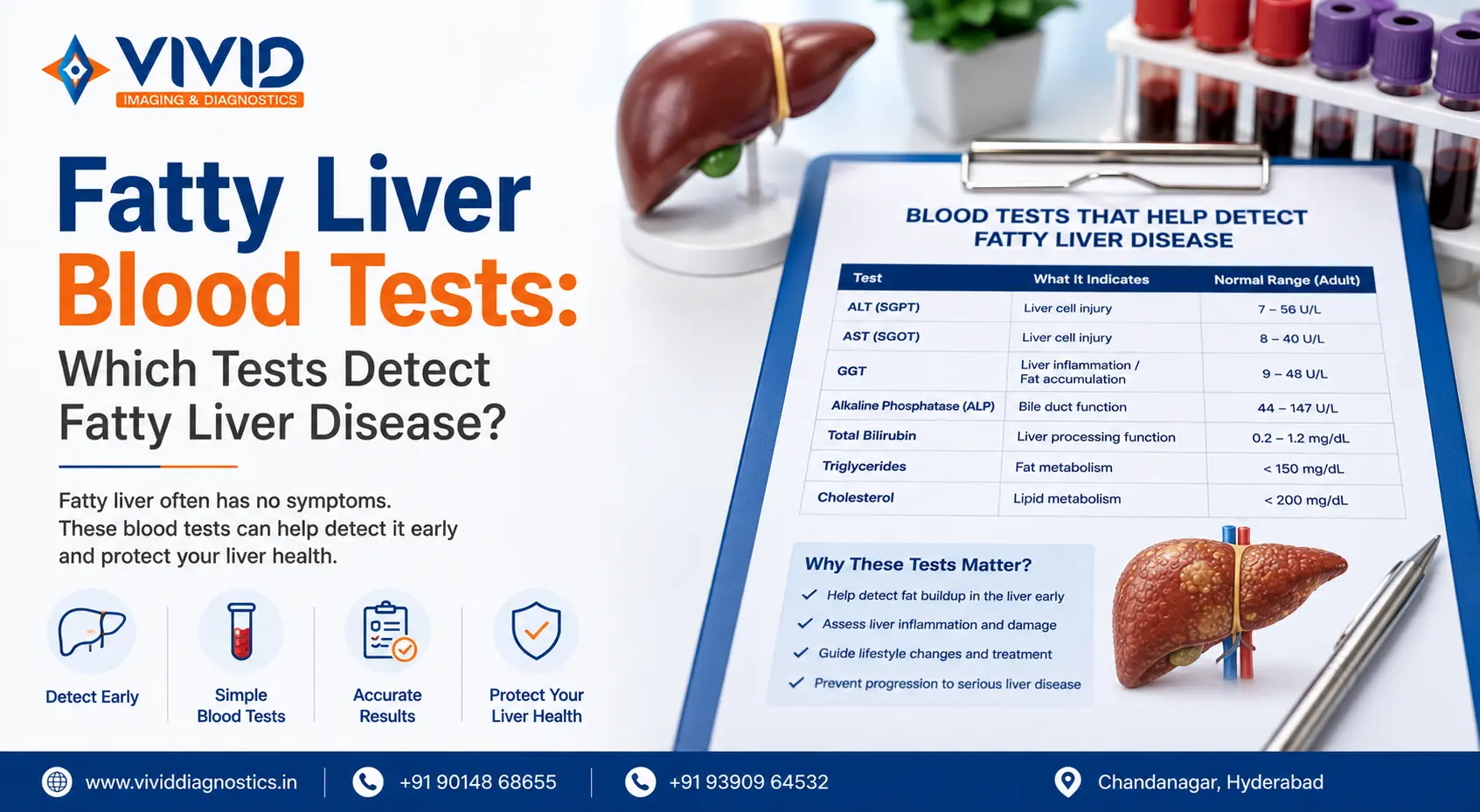
Fatty liver disease can develop quietly. Many people have no obvious symptoms and may discover the condition during a routine health checkup or an abdominal scan.
If your doctor suspects fatty liver, you may be asked to undergo several Fatty Liver Blood Tests. These tests can provide important information about liver health, inflammation, and metabolic risk factors. However, blood tests alone usually cannot confirm that fat is present in the liver.
So, which blood tests are useful? What do ALT and AST mean? Can a normal liver function test rule out fatty liver? And when is an ultrasound or another imaging test necessary?
This guide explains the blood tests commonly used when evaluating suspected fatty liver disease, what your results may indicate, and how doctors combine blood tests with medical history and imaging to reach a diagnosis.
Important: Blood test results should always be interpreted using the reference ranges provided by your laboratory and in the context of your individual health history. An abnormal result does not automatically mean you have fatty liver, and normal liver enzymes do not completely rule it out.
Table of Contents
- What Is Fatty Liver Disease?
- Can Blood Tests Detect Fatty Liver?
- Which Blood Tests Are Used for Fatty Liver?
- ALT and Fatty Liver
- AST and Fatty Liver
- GGT and Fatty Liver
- Bilirubin and Fatty Liver
- Albumin and Total Protein
- Blood Tests for Metabolic Risk Factors
- Can a Normal Liver Function Test Rule Out Fatty Liver?
- What Other Tests Are Used to Diagnose Fatty Liver?
- Understanding Fatty Liver Blood Test Results
- Who Should Get Tested?
- How Is Fatty Liver Treated?
- Frequently Asked Questions
- Conclusion
What Is Fatty Liver Disease?
Fatty liver disease occurs when excess fat accumulates in the liver.
One common form is metabolic dysfunction-associated steatotic liver disease (MASLD), which is associated with metabolic risk factors such as overweight or obesity, type 2 diabetes, high blood pressure, and abnormal cholesterol or triglyceride levels.
Another important cause of fatty liver is excessive alcohol consumption.
Fatty liver may be mild and stable in some people, while others can develop liver inflammation and progressive scarring over time.
The challenge is that fatty liver often produces few or no symptoms, especially during its early stages.
That is why blood tests and appropriate screening can be useful when risk factors are present.
Can Blood Tests Detect Fatty Liver?
Blood tests can provide valuable information about liver health, but they usually cannot directly show whether fat has accumulated inside the liver.
Certain blood tests can identify:
- Liver enzyme abnormalities
- Signs that may suggest liver cell injury
- Bilirubin levels
- Liver protein production
- Metabolic risk factors
- Other conditions that may affect the liver
However, imaging tests such as an abdominal ultrasound may be needed to detect liver fat.
Doctors therefore often combine blood tests with medical history, physical examination, metabolic risk factors, and imaging.
Which Blood Tests Are Used for Fatty Liver?
There is no single blood test that can diagnose every case of fatty liver.
Commonly used tests include:
- ALT
- AST
- GGT
- ALP
- Bilirubin
- Albumin
- Total protein
- Complete blood count in appropriate circumstances
- Blood glucose or HbA1c
- Lipid profile
Let’s look at what these tests can tell you.
1. ALT — Alanine Aminotransferase
ALT is one of the most commonly discussed liver enzymes.
It is found predominantly in liver cells. When liver cells are irritated or injured, ALT can rise in the bloodstream.
An elevated ALT may occur in people with fatty liver, but it can also have many other causes, including:
- Viral hepatitis
- Alcohol-related liver injury
- Medication-related liver injury
- Certain supplements
- Other liver conditions
Therefore, ALT alone cannot diagnose fatty liver.
It is one piece of the overall clinical picture.
2. AST — Aspartate Aminotransferase
AST is another enzyme commonly included in liver blood testing.
AST can increase with liver injury, but unlike ALT, it is also found in muscles and other tissues.
Doctors may compare AST and ALT when evaluating abnormal liver tests.
The pattern of enzyme changes can sometimes provide useful clues about the possible cause, but further evaluation may still be necessary.
3. GGT — Gamma-Glutamyl Transferase
GGT is an enzyme associated with the liver and biliary system.
An elevated GGT can occur with various liver and bile duct conditions.
GGT can also be influenced by alcohol consumption and certain medications.
Because GGT is not specific to fatty liver, doctors interpret it alongside other liver tests rather than using it as a standalone diagnostic test.
4. ALP — Alkaline Phosphatase
ALP can provide information about the liver and bile ducts, but it is also produced by bone.
An elevated ALP may be associated with bile duct problems or other conditions unrelated to the liver.
If ALP is abnormal, additional tests may help determine where the elevation is coming from.
5. Bilirubin
Bilirubin is produced during the normal breakdown of red blood cells.
The liver processes bilirubin and helps eliminate it through bile.
Bilirubin may become elevated in several liver, bile duct, and blood-related conditions.
Mild fatty liver does not necessarily cause elevated bilirubin.
However, bilirubin is often included in a broader liver evaluation to help assess the overall picture.
6. Albumin and Total Protein
Albumin is a protein produced by the liver.
Albumin and total protein may be included in liver testing to provide information about protein levels and, in appropriate clinical contexts, the liver’s protein-producing capacity.
These results can also be affected by conditions outside the liver.
For this reason, they should be interpreted together with the rest of the laboratory report.
Blood Tests for Metabolic Risk Factors
When doctors evaluate suspected fatty liver, they may also look at blood tests that assess metabolic health.
These can include:
Blood Glucose
High blood glucose may indicate diabetes or impaired glucose regulation, both of which can increase the risk of fatty liver disease.
HbA1c
HbA1c provides information about average blood glucose levels over approximately the previous two to three months.
It can help identify diabetes or prediabetes in appropriate patients.
Lipid Profile
A lipid profile typically measures:
- Total cholesterol
- LDL cholesterol
- HDL cholesterol
- Triglycerides
Abnormal cholesterol and triglyceride levels are often associated with metabolic risk and may occur alongside fatty liver.
Can a Normal Liver Function Test Rule Out Fatty Liver?
No.
This is one of the most important points to remember when interpreting Fatty Liver Blood Tests.
Some people with fatty liver can have liver enzyme levels within the laboratory reference range.
In other words:
Normal ALT or AST does not necessarily mean that the liver contains no excess fat.
Similarly, an elevated liver enzyme does not automatically mean that fatty liver is present.
This is why doctors may recommend imaging when fatty liver is suspected based on risk factors, symptoms, or other findings.
What Other Tests Are Used to Diagnose Fatty Liver?
Blood tests are only one part of fatty liver evaluation.
Abdominal Ultrasound
An abdominal ultrasound is commonly used to look for changes consistent with fatty liver.
It is non-invasive and does not use ionizing radiation.
However, ultrasound has limitations, particularly when the amount of liver fat is relatively small.
FibroScan or Transient Elastography
Depending on the clinical situation, doctors may recommend transient elastography.
It can provide information about liver stiffness and, depending on the device, may also provide an estimate related to liver fat.
This can be useful when assessing the risk of liver fibrosis.
Other Imaging
In selected cases, doctors may use CT, MRI, or specialized MRI-based techniques for more detailed assessment.
The choice depends on the patient’s circumstances and the question the doctor is trying to answer.
Understanding Fatty Liver Blood Test Results
If you receive a report with several abnormal values, it can be tempting to search each number individually.
However, liver tests are best understood as a pattern.
For example:
- Elevated ALT may indicate liver cell injury.
- Elevated AST may occur with liver or muscle injury.
- Elevated GGT may provide additional information about liver or biliary conditions.
- Abnormal bilirubin may indicate a problem with bilirubin processing or bile flow.
- Abnormal glucose or HbA1c may indicate metabolic risk.
- High triglycerides may also be associated with metabolic dysfunction.
None of these results alone proves that fatty liver is present.
Your doctor may consider your:
- Age
- Weight
- Blood pressure
- Diabetes status
- Cholesterol levels
- Alcohol intake
- Medications
- Family history
- Symptoms
- Previous test results
This broader approach helps avoid misinterpreting one abnormal number.
Who Should Consider Fatty Liver Testing?
Not everyone needs extensive liver testing.
Your healthcare professional may consider evaluation if you have risk factors such as:
- Overweight or obesity
- Type 2 diabetes
- High triglycerides
- Abnormal cholesterol
- High blood pressure
- Metabolic syndrome
- A history of abnormal liver enzymes
- A family history of certain liver conditions
- Regular or excessive alcohol consumption
- Certain medications or medical conditions
People with unexplained abnormal liver enzymes may also require further evaluation.
How Is Fatty Liver Treated?
Treatment depends on the underlying cause and whether there is evidence of liver inflammation or fibrosis.
For metabolic fatty liver disease, lifestyle changes are often an important part of management.
Maintain a Healthy Weight
If you are overweight, gradual weight reduction can help reduce liver fat and improve metabolic health.
Even modest, sustained weight loss may provide benefits.
Eat a Balanced Diet
Focus on:
- Vegetables
- Fruits
- Whole grains
- Pulses
- Lean protein
- Healthy sources of unsaturated fats
Limit excessive intake of highly processed foods, sugary beverages, and foods high in unhealthy fats.
Exercise Regularly
Regular physical activity can help improve insulin sensitivity, weight management, and overall metabolic health.
Manage Diabetes and Cholesterol
Good control of blood glucose, blood pressure, and cholesterol is important for reducing cardiovascular and metabolic risks.
Avoid Excessive Alcohol
Alcohol can contribute to liver injury. If you have abnormal liver tests or liver disease, discuss alcohol use with your healthcare professional.
Follow Medical Advice
Some people may require medication to manage associated conditions such as diabetes, high cholesterol, or obesity.
Do not start supplements or “liver detox” products without discussing them with your doctor.
Frequently Asked Questions About Fatty Liver Blood Tests
What blood tests are best for fatty liver?
Common tests include ALT, AST, GGT, ALP, bilirubin, albumin, and other liver markers. Blood glucose, HbA1c, and a lipid profile may also be useful for assessing metabolic risk.
Can a blood test confirm fatty liver?
Usually, blood tests alone cannot confirm the presence of liver fat. Imaging, commonly ultrasound in appropriate cases, may be needed.
Is ALT always high in fatty liver?
No. Some people with fatty liver have ALT levels within the laboratory reference range.
What is the most important liver enzyme for fatty liver?
ALT is commonly used when evaluating liver injury, but there is no single enzyme that can diagnose fatty liver on its own. ALT, AST, GGT, and other results are interpreted together.
Can fatty liver be reversed?
In many people, improving metabolic health, maintaining a healthy weight, exercising regularly, eating a balanced diet, and addressing underlying conditions can reduce liver fat and lower the risk of progression.
Does fatty liver cause symptoms?
Many people with fatty liver have no symptoms. Some may experience tiredness or vague discomfort, but these symptoms are not specific to fatty liver.
Should I get a fatty liver test if I feel healthy?
If you have significant risk factors such as obesity, diabetes, high triglycerides, or previously abnormal liver enzymes, discuss screening with your healthcare professional even if you feel well.
Conclusion
Fatty Liver Blood Tests can provide valuable clues about liver health, but they are only one part of the evaluation.
ALT, AST, GGT, ALP, bilirubin, albumin, and other markers can help doctors identify possible liver abnormalities. Tests such as blood glucose, HbA1c, and a lipid profile can also reveal metabolic factors associated with fatty liver disease.
However, normal liver enzymes do not completely rule out fatty liver, and an abnormal liver test does not automatically mean that fatty liver is the cause.
When fatty liver is suspected, your doctor may combine blood tests with your medical history, physical examination, metabolic risk factors, and imaging such as an ultrasound.
If you have risk factors or abnormal liver results, don’t ignore them. Early evaluation and sustainable lifestyle changes can play an important role in protecting long-term liver health.
Get Your Liver Tests Done at VIVID Imaging & Diagnostics
At VIVID Imaging & Diagnostics, we provide diagnostic testing to help you stay informed about your liver and overall health.
If your doctor has recommended liver blood tests or a health checkup, timely testing can help identify potential concerns and guide appropriate medical evaluation.
🌐 Website: https://vividdiagnostics.in/
📞 Call Us: +91 90148 68655 | +91 93909 64532
Book your diagnostic test today and take a proactive step toward better health.
Medical disclaimer: This article is for general educational purposes only and does not replace diagnosis, treatment, or advice from a qualified healthcare professional.