
 MRI Scan
 CT Scan
 Health Checkups
 Ultrasound
 Lab Tests
 2D Echo
 ECG
 EEG
 ENMG/NCV
 Health Screening
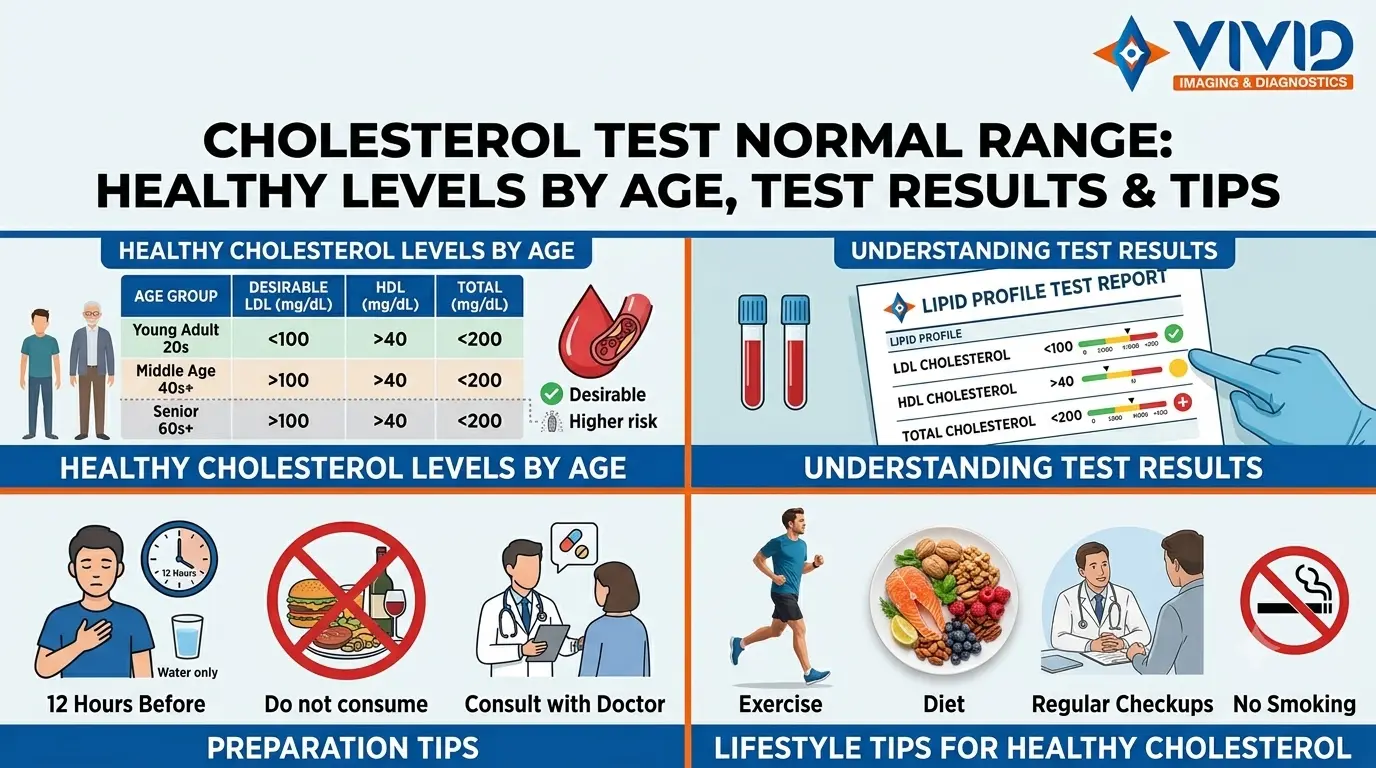
Understanding the Cholesterol Test Normal Range helps you assess your heart health and identify cholesterol levels that may increase your risk of cardiovascular disease. A cholesterol test, also called a lipid profile, measures different types of fats in your blood, including total cholesterol, LDL cholesterol, HDL cholesterol, and triglycerides.
High cholesterol usually does not cause noticeable symptoms. A blood test is therefore important for identifying abnormal levels before complications develop. However, a healthy cholesterol level is not the same for everyone. Your age, medical history, diabetes status, blood pressure, and overall cardiovascular risk can influence the cholesterol targets recommended by your doctor.
This guide explains cholesterol normal ranges, how to understand your lipid profile report, when testing may be needed, and what you can do to support healthy cholesterol levels.
Table of Contents
- What Is a Cholesterol Test?
- Cholesterol Test Normal Range
- Cholesterol Normal Range by Age
- Understanding Your Lipid Profile Results
- What Causes High Cholesterol?
- Symptoms of High Cholesterol
- When Should You Get a Cholesterol Test?
- How to Prepare for a Cholesterol Test
- How to Maintain Healthy Cholesterol Levels
- Cholesterol Testing in Hyderabad
- Frequently Asked Questions
- Conclusion
What Is a Cholesterol Test?
A cholesterol test measures the amount of cholesterol and certain fats in your blood. It is commonly performed as part of a lipid profile test.
Cholesterol is a waxy substance that the body needs to build cells and produce certain hormones. However, excessive levels of some blood lipids can contribute to plaque buildup inside arteries, increasing the risk of heart attack and stroke.
A standard lipid profile usually includes:
- Total cholesterol: The overall amount of cholesterol in the blood.
- LDL cholesterol: Low-density lipoprotein, often called “bad” cholesterol because elevated levels can contribute to plaque formation.
- HDL cholesterol: High-density lipoprotein, often called “good” cholesterol because it helps transport cholesterol away from tissues.
- Triglycerides: A type of fat in the blood that provides energy but may increase cardiovascular risk when elevated.
Some reports also include non-HDL cholesterol, which represents total cholesterol minus HDL cholesterol.
Cholesterol Test Normal Range
The following table provides commonly used reference levels for adults. These are general guides, not individualized treatment targets.
Normal Cholesterol Levels for Adults
| Cholesterol Measurement | General Desirable Level |
|---|---|
| Total cholesterol | Less than 200 mg/dL |
| LDL cholesterol | Less than 100 mg/dL is optimal for many adults |
| HDL cholesterol in men | 40 mg/dL or higher |
| HDL cholesterol in women | 50 mg/dL or higher |
| Triglycerides | Less than 150 mg/dL |
| Non-HDL cholesterol | Less than 130 mg/dL is a commonly used desirable level |
Important: These values do not replace your doctor’s assessment. People with established cardiovascular disease, diabetes, chronic kidney disease, or a high overall cardiovascular risk may need lower LDL cholesterol targets.
What Do These Cholesterol Levels Mean?
Total cholesterol below 200 mg/dL: Generally considered desirable for adults. However, total cholesterol alone does not show the complete risk picture.
LDL cholesterol below 100 mg/dL: A commonly used optimal level for many adults. People at higher cardiovascular risk may require a lower target.
HDL cholesterol: Low levels can be associated with higher cardiovascular risk. However, a high HDL level does not automatically cancel out the risks associated with high LDL cholesterol.
Triglycerides below 150 mg/dL: Generally considered normal for adults. Higher levels may be associated with metabolic conditions and increased cardiovascular risk.
Your healthcare professional should interpret the complete lipid profile rather than focusing on one number in isolation.
Cholesterol Normal Range by Age
Cholesterol levels and recommended treatment targets can vary with age, health status, and overall cardiovascular risk. Children and adolescents also have different reference ranges from adults.
Cholesterol Levels in Children and Teenagers
For children and adolescents, commonly used lipid screening categories include:
| Measurement | Acceptable Level |
|---|---|
| Total cholesterol | Less than 170 mg/dL |
| LDL cholesterol | Less than 110 mg/dL |
| HDL cholesterol | More than 45 mg/dL |
| Triglycerides under age 10 | Less than 75 mg/dL |
| Triglycerides age 10–19 | Less than 90 mg/dL |
These are general pediatric screening categories. Interpretation varies with age, and a child’s report should be reviewed by a qualified healthcare professional.
Cholesterol Levels in Adults Aged 20–39
For younger adults, maintaining healthy LDL cholesterol levels and addressing risk factors early can help reduce long-term cardiovascular risk.
A total cholesterol level below 200 mg/dL and LDL below 100 mg/dL are commonly used general guides. However, people with familial hypercholesterolemia, diabetes, or other significant risk factors may need earlier evaluation and treatment.
Cholesterol Levels in Adults Aged 40–59
Cardiovascular risk often increases with age. Doctors may assess cholesterol alongside blood pressure, smoking status, diabetes, family history, and other factors to determine whether lifestyle changes or medication are appropriate.
A lipid profile can help identify elevated LDL cholesterol even when a person feels healthy.
Cholesterol Levels After Age 60
Cholesterol results in older adults should be interpreted in the context of overall health, existing medical conditions, medicines, and cardiovascular risk.
There is no single cholesterol target that applies to every person over 60. Treatment decisions should consider the potential benefits and risks for the individual.
Key point: Cholesterol targets are based more on overall cardiovascular risk than age alone.
Understanding Your Lipid Profile Results
A lipid profile contains several measurements. Understanding their roles can help you discuss your results with your doctor.
1. Total Cholesterol
Total cholesterol combines cholesterol carried in different lipoproteins. A desirable result is generally below 200 mg/dL for adults.
However, total cholesterol can appear acceptable even when LDL cholesterol is elevated. That is why the individual components of the lipid profile matter.
2. LDL Cholesterol
LDL cholesterol is an important factor in the development of atherosclerosis, a condition in which plaque builds up in artery walls.
Higher LDL levels are associated with increased cardiovascular risk. The appropriate LDL target depends on your risk profile.
3. HDL Cholesterol
HDL helps transport cholesterol away from tissues and toward the liver for processing.
Low HDL can be a marker of increased cardiovascular risk, but treatment usually focuses on lowering LDL and managing overall risk rather than simply trying to raise HDL with medication.
4. Triglycerides
Triglycerides are affected by factors such as diet, alcohol intake, body weight, diabetes, certain medicines, and inherited conditions.
Very high triglyceride levels can increase the risk of pancreatitis and require prompt medical assessment.
5. Non-HDL Cholesterol
Non-HDL cholesterol is calculated by subtracting HDL cholesterol from total cholesterol. It represents cholesterol carried by several potentially atherogenic particles.
It can be useful when assessing cardiovascular risk, especially in people with elevated triglycerides or metabolic conditions.
What Causes High Cholesterol?
High cholesterol can result from several factors, including lifestyle, medical conditions, and genetics.
Common contributors include:
- Diet high in saturated fats and trans fats
- Low levels of physical activity
- Smoking
- Excessive alcohol intake, particularly for elevated triglycerides
- Excess body weight
- Diabetes
- Underactive thyroid (hypothyroidism)
- Certain kidney or liver conditions
- Some medicines
- Inherited conditions such as familial hypercholesterolemia
Even people who eat well and exercise regularly can have high LDL cholesterol because of genetic factors or underlying medical conditions.
Symptoms of High Cholesterol
High cholesterol usually has no obvious symptoms. Many people discover it only through a blood test.
Very high cholesterol caused by certain inherited conditions can sometimes lead to visible signs, such as cholesterol deposits in tendons or around the eyes. These signs are not present in everyone and cannot replace blood testing.
Do not wait for symptoms before checking cholesterol if your healthcare professional recommends screening.
When Should You Get a Cholesterol Test?
The timing of cholesterol testing depends on your age, risk factors, previous results, and medical history.
Testing may be recommended if you:
- Have diabetes or high blood pressure
- Have a family history of early heart disease or very high cholesterol
- Smoke
- Have cardiovascular disease
- Have chronic kidney disease
- Are overweight or have other metabolic risk factors
- Are taking cholesterol-lowering medication
- Have previously had an abnormal lipid profile
For many adults, cholesterol is checked periodically as part of preventive healthcare. People with high cholesterol or established cardiovascular disease may need more frequent monitoring.
Your doctor can recommend an appropriate testing schedule.
How to Prepare for a Cholesterol Test
A cholesterol test is performed using a blood sample.
Is Fasting Required?
Many lipid profiles can be performed without fasting. However, your doctor may request a fasting sample in certain situations, particularly when triglycerides are elevated or a specific fasting measurement is needed.
If fasting is required, the laboratory will tell you how long to fast. Plain water is generally allowed unless you are given different instructions.
Preparation Tips
- Confirm whether your test requires fasting.
- Follow the laboratory’s instructions about food and drinks.
- Do not stop prescribed medicines without medical advice.
- Inform your healthcare professional about your medicines and supplements.
- Ask whether recent illness or other circumstances could affect the results.
- Bring previous cholesterol reports if available for comparison.
How to Maintain Healthy Cholesterol Levels
Lifestyle changes can improve cholesterol levels and reduce cardiovascular risk. Some people also need medication based on their LDL level and overall risk.
1. Choose Heart-Healthy Foods
Include vegetables, fruits, whole grains, beans, lentils, nuts, and other fibre-rich foods.
Replace foods high in saturated fat with healthier unsaturated fat sources where appropriate. Limit trans fats and frequently consumed highly processed foods.
2. Exercise Regularly
Aim for at least 150 minutes of moderate-intensity aerobic activity per week, if your health allows, along with muscle-strengthening activity on two or more days.
Start gradually if you are inactive or have a medical condition that affects exercise.
3. Maintain a Healthy Weight
For people who have excess weight, gradual and sustainable weight management can improve triglycerides and other cardiovascular risk factors.
4. Avoid Smoking
Smoking damages blood vessels and increases cardiovascular risk. Stopping smoking benefits heart and vascular health.
5. Limit Alcohol
Alcohol can increase triglyceride levels, especially when consumed in excess. If triglycerides are high, discuss alcohol intake with your healthcare professional.
6. Take Prescribed Medicines as Directed
Lifestyle changes are important, but they may not be enough for everyone. Statins and other cholesterol-lowering medicines may be recommended depending on your cardiovascular risk.
Do not start, stop, or change medication based on a single result without medical guidance.
Cholesterol Testing in Hyderabad
If you are looking for a Cholesterol Test in Hyderabad, a lipid profile can help measure total cholesterol, LDL, HDL, and triglycerides.
Vivid Imaging & Diagnostics in Chandanagar, Hyderabad, offers diagnostic services for people seeking blood testing. Before your visit, confirm the lipid profile tests available, whether fasting is required for your specific order, and the expected reporting time.
If your cholesterol levels are abnormal, discuss the report with a qualified healthcare professional. The right approach depends on the complete lipid profile and your personal cardiovascular risk—not simply whether total cholesterol falls within a general reference range.
Frequently Asked Questions About Cholesterol Test Normal Range
1. What is the normal cholesterol level for adults?
Total cholesterol below 200 mg/dL is generally considered desirable. LDL, HDL, triglycerides, and overall cardiovascular risk should also be assessed.
2. What is the normal LDL cholesterol range?
LDL below 100 mg/dL is a commonly used optimal level for many adults. People with established cardiovascular disease or other high-risk conditions may need lower targets.
3. What is the normal HDL cholesterol level?
HDL of at least 40 mg/dL in men and at least 50 mg/dL in women is commonly used as a general reference. HDL is only one part of cardiovascular risk assessment.
4. Does a cholesterol test require fasting?
Not always. Many lipid profiles can be performed without fasting, but your doctor may request fasting testing in particular circumstances. Follow the instructions provided for your test.
5. Can high cholesterol occur without symptoms?
Yes. High cholesterol usually does not cause noticeable symptoms, which is why blood testing is important when screening is recommended.
6. Is a cholesterol level below 200 mg/dL always healthy?
Not necessarily. Total cholesterol does not show the complete risk picture. LDL, HDL, triglycerides, medical history, and other cardiovascular risk factors must also be considered.
7. How often should cholesterol be checked?
The frequency depends on age, previous results, risk factors, and treatment. People taking cholesterol-lowering medicines or living with cardiovascular disease may need more frequent monitoring.
8. Can diet alone reduce high cholesterol?
Diet and other lifestyle changes can improve cholesterol, but some people need medication because of genetic factors, high LDL levels, or elevated cardiovascular risk.
9. What is the normal cholesterol range for children?
Common pediatric screening categories consider total cholesterol below 170 mg/dL and LDL below 110 mg/dL acceptable. Children’s results should be interpreted using age-appropriate guidelines.
10. Where can I get a cholesterol test in Chandanagar, Hyderabad?
You can contact Vivid Imaging & Diagnostics in Chandanagar, Hyderabad, to confirm the availability and preparation requirements for a lipid profile test.
Conclusion
Understanding the Cholesterol Test Normal Range can help you make informed decisions about your heart health. Total cholesterol below 200 mg/dL is generally desirable for adults, but LDL cholesterol, HDL cholesterol, triglycerides, and individual cardiovascular risk all matter.
Because high cholesterol usually causes no symptoms, testing can help identify concerns before complications develop. If your results are abnormal, a healthcare professional can assess your overall risk and recommend appropriate lifestyle changes, follow-up testing, or medication.
For cholesterol testing in Chandanagar, Hyderabad, contact Vivid Imaging & Diagnostics to confirm the available lipid profile services and test preparation requirements.
Medical disclaimer: This article is for educational purposes only and does not replace professional medical advice, diagnosis, or treatment.