
 MRI Scan
 CT Scan
 Health Checkups
 Ultrasound
 Lab Tests
 2D Echo
 ECG
ECG EEG
EEG ENMG/NCV
 Health Screening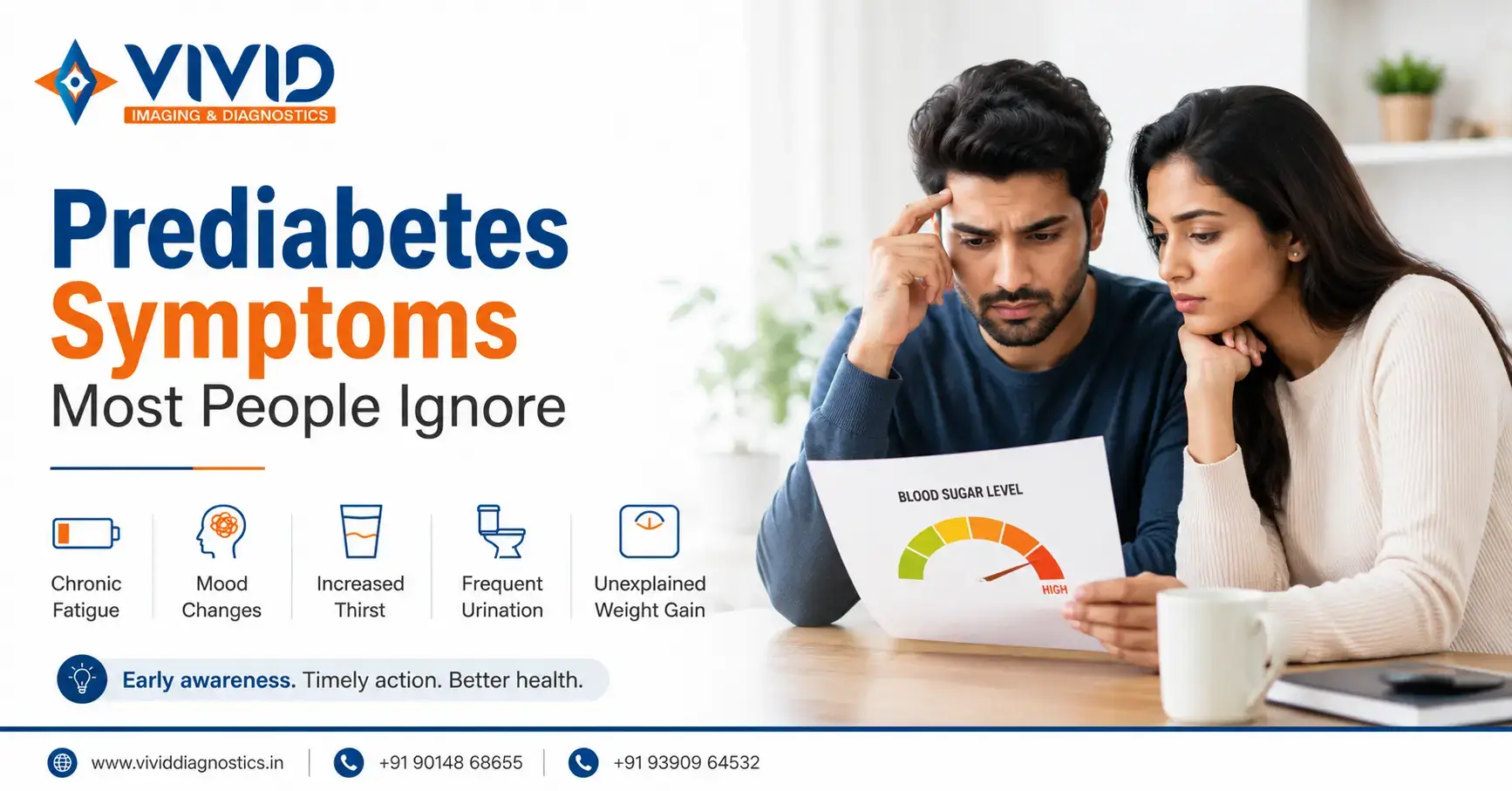
Prediabetes is a serious health condition that affects millions of people worldwide, yet many don’t realize they have it. Unlike Type 2 diabetes, prediabetes symptoms are often mild, subtle, or completely absent. As a result, people may live with elevated blood sugar levels for years without knowing it, increasing their risk of developing Type 2 diabetes, heart disease, stroke, and kidney problems.
The encouraging news is that prediabetes is often reversible with early diagnosis and healthy lifestyle changes. Recognizing prediabetes symptoms and getting tested at the right time can help prevent long-term complications.
In this guide, you’ll learn the most commonly ignored warning signs of prediabetes, who is at risk, how it is diagnosed, and what you can do to lower your risk of progressing to diabetes.
Table of Contents
- What Is Prediabetes?
- Why Early Detection Matters
- Prediabetes Symptoms Most People Ignore
- Prediabetes Symptoms in Women
- Prediabetes Symptoms in Men
- Who Is at Risk?
- How Prediabetes Is Diagnosed
- Can Prediabetes Be Reversed?
- Tips to Prevent Type 2 Diabetes
- Why Choose Vivid Imaging & Diagnostics?
- Frequently Asked Questions
- Conclusion
What Is Prediabetes?
Prediabetes is a condition where your blood sugar levels are higher than normal but not high enough to be diagnosed as Type 2 diabetes. It usually develops because your body becomes resistant to insulin or doesn’t produce enough insulin to maintain normal blood glucose levels.
Many people with prediabetes feel completely healthy, which is why routine health checkups are so important. Without treatment or lifestyle changes, prediabetes can gradually progress to Type 2 diabetes.
The good news is that identifying prediabetes early gives you the opportunity to take action before permanent damage occurs.
Why Early Detection Matters
Prediabetes often develops silently. Even before diabetes is diagnosed, elevated blood sugar can begin affecting blood vessels, nerves, and other organs.
Early detection allows you to:
- Reduce your risk of developing Type 2 diabetes
- Improve blood sugar control naturally
- Protect your heart and blood vessels
- Lower the risk of kidney disease
- Reduce the chances of nerve damage
- Improve your overall health and quality of life
Routine diabetes screening is especially important if you have multiple risk factors.
Prediabetes Symptoms Most People Ignore
Although many people experience no noticeable symptoms, some early warning signs should not be ignored.
1. Constant Fatigue
Feeling tired even after getting enough sleep is one of the most overlooked prediabetes symptoms.
When your body struggles to use glucose efficiently, your cells receive less energy, leaving you feeling exhausted throughout the day.
2. Increased Thirst
High blood sugar causes your body to lose more water through urine.
As a result, you may notice that you’re drinking more water than usual or feeling thirsty throughout the day.
3. Frequent Urination
If you’re visiting the bathroom more often, especially at night, it may be because your kidneys are working harder to remove excess glucose from your bloodstream.
4. Blurred Vision
Temporary blurred vision can occur when high blood sugar affects the fluid balance in your eyes.
Many people assume they simply need new glasses, when elevated blood sugar could be contributing to the problem.
5. Increased Hunger
Even after eating, you may continue feeling hungry because your body’s cells are not effectively using glucose for energy.
6. Slow-Healing Cuts and Wounds
Minor cuts, scratches, or bruises that take longer than usual to heal may indicate high blood sugar levels.
Poor circulation and changes in immune function can slow the healing process.
7. Frequent Skin Infections
Recurring skin infections, fungal infections, or urinary tract infections can sometimes be linked to elevated blood sugar.
8. Dark Patches of Skin (Acanthosis Nigricans)
One of the most recognizable prediabetes symptoms is the appearance of dark, thickened skin around the:
- Neck
- Armpits
- Groin
- Elbows
- Knuckles
This condition is commonly associated with insulin resistance.
9. Tingling or Numbness
Although more common in diabetes, some people with prediabetes may experience tingling, burning, or numbness in their hands or feet.
10. Unexplained Weight Changes
Some individuals notice gradual weight gain due to insulin resistance, while others may experience unexplained weight loss if blood sugar levels become significantly elevated.
Prediabetes Symptoms in Women
Women may experience some symptoms differently because of hormonal changes.
Common prediabetes symptoms in women include:
- Persistent fatigue
- Increased hunger
- Frequent urinary tract infections
- Recurrent yeast infections
- Difficulty losing weight
- Polycystic Ovary Syndrome (PCOS)
- Increased thirst
Women with a history of gestational diabetes have a higher risk of developing prediabetes later in life.
Prediabetes Symptoms in Men
Men may notice:
- Increased thirst
- Frequent urination
- Reduced energy levels
- Weight gain around the abdomen
- Blurred vision
- Slow wound healing
- Tingling in the feet
Because these symptoms often develop gradually, they are commonly dismissed as part of aging or work-related stress.
Who Is at Risk of Prediabetes?
You are more likely to develop prediabetes if you:
- Are 35 years or older
- Are overweight or obese
- Have a family history of diabetes
- Have high blood pressure
- Have abnormal cholesterol levels
- Live a sedentary lifestyle
- Have PCOS
- Had gestational diabetes
- Have a history of heart disease
- Smoke or consume excessive alcohol
If you have one or more of these risk factors, regular diabetes screening is recommended.
How Is Prediabetes Diagnosed?
Prediabetes cannot be diagnosed based on symptoms alone. Blood tests are needed to confirm whether your blood sugar levels are elevated.
Your healthcare provider may recommend:
HbA1c Test
Measures your average blood sugar over the past 2–3 months.
Prediabetes: 5.7%–6.4%
Fasting Blood Sugar (FBS)
Measures blood glucose after fasting for at least 8 hours.
Prediabetes: 100–125 mg/dL
Oral Glucose Tolerance Test (OGTT)
Measures how your body processes glucose after drinking a glucose solution.
Prediabetes: 140–199 mg/dL (2-hour value)
These tests help identify prediabetes before it progresses to Type 2 diabetes.
Can Prediabetes Be Reversed?
Yes. In many cases, prediabetes can be reversed through healthy lifestyle changes.
Your healthcare provider may recommend:
- Losing excess body weight
- Eating a balanced, high-fiber diet
- Exercising regularly
- Reducing sugary foods and drinks
- Managing stress
- Getting enough sleep
- Monitoring blood sugar as advised
- Attending regular health checkups
Even modest improvements in weight and physical activity can significantly reduce the risk of developing Type 2 diabetes.
Tips to Prevent Type 2 Diabetes
Healthy daily habits can make a big difference.
Eat Smart
Choose:
- Whole grains
- Fresh vegetables
- Fruits in moderation
- Lean protein
- Healthy fats
- High-fiber foods
Limit processed foods, sugary beverages, and refined carbohydrates.
Stay Active
Aim for at least 150 minutes of moderate physical activity per week, unless otherwise advised by your healthcare provider.
Maintain a Healthy Weight
Losing even 5–10% of your body weight may improve insulin sensitivity and lower diabetes risk.
Schedule Regular Health Checkups
Routine blood tests can detect blood sugar changes before symptoms become severe.
Why Choose Vivid Imaging & Diagnostics?
Early diagnosis is one of the most effective ways to prevent diabetes complications. At Vivid Imaging & Diagnostics, Chandanagar, Hyderabad, we provide accurate laboratory testing to support early detection of prediabetes and diabetes.
Our diagnostic services include:
- HbA1c Test
- Fasting Blood Sugar (FBS)
- Random Blood Sugar (RBS)
- Oral Glucose Tolerance Test (OGTT)
- Comprehensive Diabetes Screening Packages
- Preventive Health Checkups
With experienced laboratory professionals, advanced diagnostic technology, and timely reports, we help patients make informed healthcare decisions.
To book your diabetes screening or preventive health checkup, visit Vivid Imaging and Diagnostic Centre or contact our team for assistance.
Frequently Asked Questions
Can prediabetes have no symptoms?
Yes. Many people with prediabetes have no noticeable symptoms, which is why routine screening is essential, especially if you have risk factors.
What are the first prediabetes symptoms?
Early symptoms may include fatigue, increased thirst, frequent urination, blurred vision, slow wound healing, and increased hunger. However, some individuals remain symptom-free.
Can prediabetes be reversed?
Yes. Healthy eating, regular exercise, weight management, and early medical guidance can often reverse prediabetes or significantly reduce the risk of developing Type 2 diabetes.
Which test is best for diagnosing prediabetes?
Healthcare providers commonly use the HbA1c test, Fasting Blood Sugar (FBS), and Oral Glucose Tolerance Test (OGTT) to diagnose prediabetes.
How often should I get tested for prediabetes?
Adults with risk factors should discuss screening frequency with their healthcare provider. Many people at increased risk benefit from periodic blood sugar testing.
Conclusion
Ignoring prediabetes symptoms can allow elevated blood sugar levels to progress silently, increasing the risk of Type 2 diabetes and its complications. While symptoms such as fatigue, increased thirst, frequent urination, blurred vision, and slow-healing wounds may seem minor, they can be early warning signs that deserve attention. The most effective way to detect prediabetes is through appropriate blood tests and regular health checkups.
If you have risk factors or are experiencing any of these symptoms, don’t wait for diabetes to develop. Schedule a diabetes screening with Vivid Imaging & Diagnostics, Chandanagar, Hyderabad. Our advanced laboratory services and experienced team are committed to helping you detect health concerns early and take proactive steps toward better health.
Visit Vivid Imaging and Diagnostic Centre to book your appointment and begin your journey toward healthier blood sugar management.