
 MRI Scan
 CT Scan
 Health Checkups
 Ultrasound
 Lab Tests
 2D Echo
 ECG
 EEG
 ENMG/NCV
 Health Screening
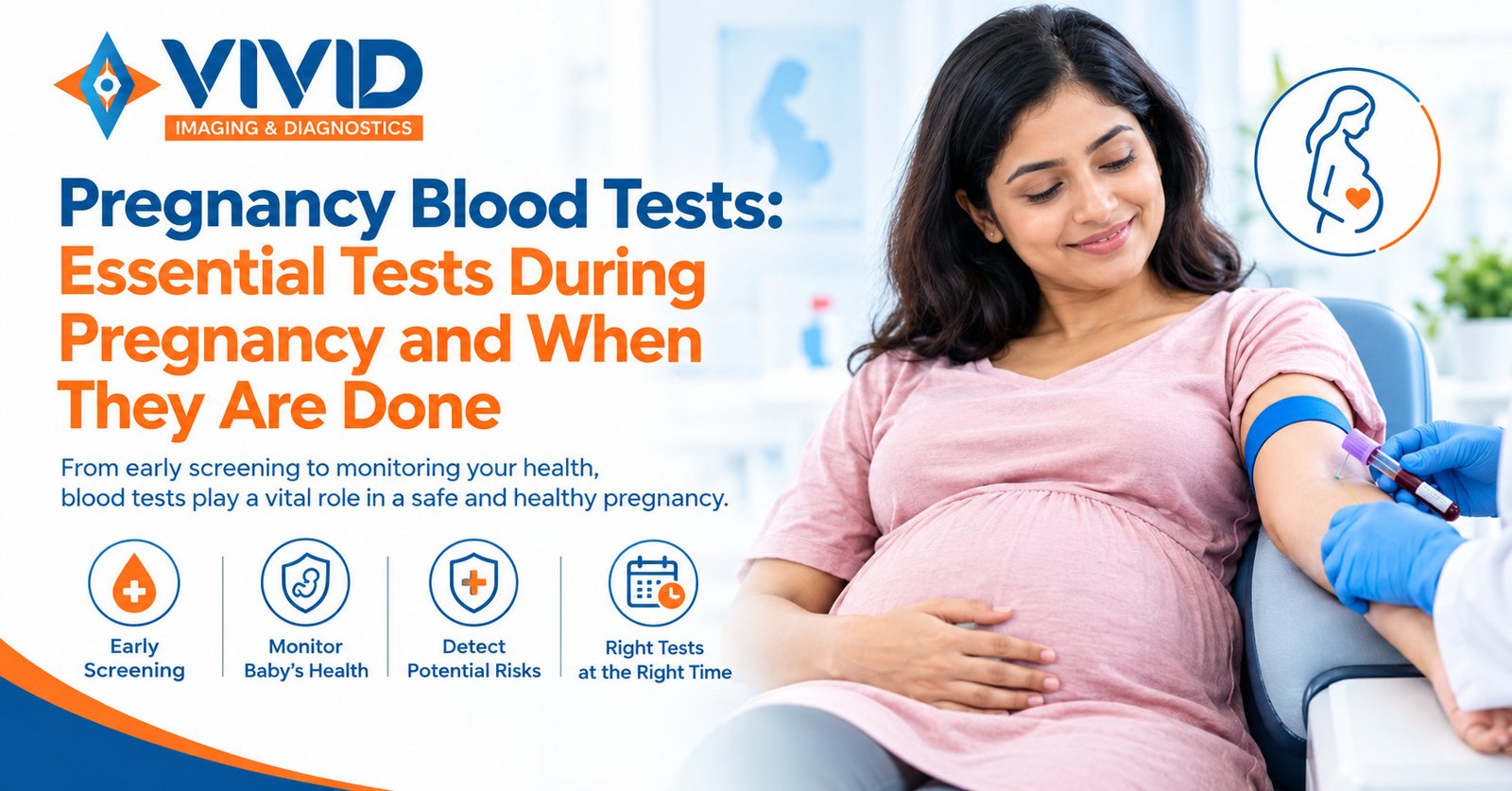
Pregnancy involves several health checks to monitor the mother and developing baby. Pregnancy blood tests are an important part of antenatal care because they can help identify blood-group incompatibility, anaemia, infections, blood-sugar abnormalities, thyroid problems, and other conditions that may require monitoring or treatment.
Not every pregnant woman needs every blood test at every visit. The tests recommended can vary according to gestational age, medical history, symptoms, previous pregnancy history, family history, and individual risk factors.
Understanding which pregnancy blood tests are commonly performed and when they may be recommended can help expectant mothers prepare for antenatal appointments.
Table of Contents
- What Are Pregnancy Blood Tests?
- Why Are Blood Tests Done During Pregnancy?
- Common Pregnancy Blood Tests
- Blood Tests During the First Trimester
- Blood Tests During the Second Trimester
- Blood Tests During the Third Trimester
- Blood Group and Rh Factor Testing
- Complete Blood Count During Pregnancy
- Blood Sugar Tests in Pregnancy
- Thyroid Tests During Pregnancy
- Pregnancy Infection Screening
- Hemoglobin and Iron Testing
- Pregnancy Blood Tests and Genetic Screening
- Do Pregnancy Blood Tests Require Fasting?
- How Often Are Blood Tests Needed During Pregnancy?
- Pregnancy Blood Tests in Hyderabad
- Frequently Asked Questions
- Conclusion
What Are Pregnancy Blood Tests?
Pregnancy blood tests are laboratory investigations performed at different stages of pregnancy to assess the mother’s health and identify conditions that could affect pregnancy management.
Some tests are commonly performed early in pregnancy, while others are recommended later or only when there is a specific clinical reason.
Depending on the stage of pregnancy and individual circumstances, blood tests may assess:
- Blood group and Rh status
- Haemoglobin and blood cell counts
- Blood glucose
- Thyroid function
- Iron status
- Certain infections
- Immunity to selected infections
- Genetic or chromosomal conditions through screening
- Other health markers when clinically indicated
These tests are generally interpreted alongside medical history, physical examination, ultrasound findings, and other antenatal assessments.
Why Are Blood Tests Done During Pregnancy?
Pregnancy causes significant physiological changes in the body. Some health conditions may develop during pregnancy without obvious symptoms.
Pregnancy blood tests can help healthcare professionals:
- Establish a baseline of maternal health
- Detect anaemia
- Identify blood-group and Rh-related issues
- Screen for certain infections
- Assess blood glucose
- Evaluate thyroid function when indicated
- Monitor previously diagnosed conditions
- Identify pregnancy-related complications
- Determine whether additional monitoring is required
The purpose is not simply to perform as many tests as possible. Each investigation should have a clinical reason.
Common Pregnancy Blood Tests
The exact list varies between individuals and healthcare providers, but common investigations may include:
| Pregnancy Blood Test | What It Helps Assess |
|---|---|
| Complete Blood Count (CBC) | Haemoglobin, red cells, white cells and platelets |
| Blood Group & Rh Typing | ABO blood group and Rh status |
| Blood Glucose Testing | Blood sugar abnormalities |
| HbA1c | Average blood glucose in selected situations |
| Thyroid Tests | Thyroid function when indicated |
| HIV Test | HIV infection screening |
| Hepatitis B Testing | Hepatitis B infection screening |
| Syphilis Testing | Syphilis screening |
| Rubella Immunity Testing | Determines immunity in appropriate settings |
| Iron/Ferritin Testing | Assesses iron stores when indicated |
| Genetic Screening Blood Tests | Screens for selected chromosomal conditions |
The tests recommended may differ depending on local antenatal guidelines and the individual’s clinical situation.
Blood Tests During the First Trimester
The first trimester is an important period for establishing the mother’s baseline health and identifying conditions that may require attention during pregnancy.
Common early pregnancy blood tests may include:
1. Complete Blood Count
A CBC can identify low haemoglobin and other blood-count abnormalities.
Anaemia is relatively common during pregnancy, and identifying it early allows appropriate evaluation and management.
2. Blood Group and Rh Factor
Knowing the mother’s ABO blood group and Rh status is important for pregnancy care.
If an expectant mother is Rh-negative, additional assessment and preventive management may be recommended depending on the mother’s and baby’s circumstances.
3. Infection Screening
Antenatal care commonly includes screening for certain infections, such as:
- HIV
- Hepatitis B
- Syphilis
The exact screening panel can vary according to healthcare guidelines and individual circumstances.
4. Blood Sugar Testing
Blood glucose may be checked early in pregnancy, particularly when there are risk factors for diabetes.
Further testing is commonly performed later in pregnancy to screen for gestational diabetes.
5. Thyroid Testing
Thyroid function may be assessed when clinically appropriate.
Testing may be particularly relevant when there is:
- Previous thyroid disease
- Thyroid-related symptoms
- Certain risk factors
- Previous abnormal thyroid results
- Other clinical indications
Blood Tests During the Second Trimester
As pregnancy progresses, some blood tests may be repeated or newly introduced depending on the pregnancy.
Gestational Diabetes Screening
Gestational diabetes is diabetes diagnosed during pregnancy.
Screening is commonly performed during the middle part of pregnancy, although timing can vary depending on risk factors and local clinical practice.
Testing may involve an oral glucose tolerance test (OGTT) or another glucose-testing approach recommended by the healthcare professional.
Repeat Blood Count
A CBC may be repeated later in pregnancy to check haemoglobin and other blood parameters, particularly because anaemia can develop or worsen during pregnancy.
Genetic Screening
Some blood-based screening tests can estimate the chance of certain chromosomal conditions.
Examples include:
- Maternal serum screening
- Combined first-trimester screening
- Cell-free DNA screening / non-invasive prenatal testing (NIPT)
These are screening tests, not diagnostic tests.
An abnormal screening result does not automatically mean that the baby has a chromosomal condition. Further evaluation may be recommended.
Blood Tests During the Third Trimester
The exact tests required during the third trimester depend on the pregnancy and previous findings.
A healthcare professional may recommend:
- Repeat CBC
- Blood group or antibody-related testing when appropriate
- Blood glucose assessment when clinically indicated
- Tests related to specific maternal conditions
- Infection testing or repeat screening when recommended
Additional tests may be needed if symptoms or complications develop.
Blood Group and Rh Factor Testing
Blood group testing is an important part of pregnancy care.
The main blood-group systems include:
- A
- B
- AB
- O
The Rh factor is also important.
If a pregnant woman is Rh-negative, healthcare professionals assess whether there is a risk of Rh incompatibility and determine whether preventive treatment is appropriate.
This is one reason blood-group testing is generally performed early in pregnancy.
Complete Blood Count During Pregnancy
A CBC during pregnancy can provide information about:
- Haemoglobin
- Red blood cells
- White blood cells
- Platelets
One of its important uses is identifying anaemia.
Pregnancy naturally causes changes in blood volume, so laboratory results need to be interpreted using pregnancy-appropriate clinical reference information rather than applying general adult values without context.
If haemoglobin is low, the healthcare professional may investigate possible causes such as iron deficiency or other nutritional or medical conditions.
Blood Sugar Tests in Pregnancy
Blood glucose testing is particularly important because some women develop gestational diabetes mellitus (GDM) during pregnancy.
Risk factors can include:
- Previous gestational diabetes
- Overweight or obesity
- Family history of diabetes
- Previous large baby
- Certain medical conditions
- Previous abnormal glucose testing
However, gestational diabetes can occur even without obvious risk factors.
Depending on the stage of pregnancy and clinical circumstances, testing may involve fasting glucose, an oral glucose tolerance test, or other appropriate investigations.
Thyroid Tests During Pregnancy
Thyroid hormones play an important role in pregnancy.
Thyroid testing may include:
- TSH
- Free T4
- Additional thyroid tests when indicated
Pregnancy changes the way thyroid-related laboratory results should be interpreted, so results should be reviewed using appropriate pregnancy-specific clinical guidance.
Women with known thyroid disease may require more regular monitoring during pregnancy.
Pregnancy Infection Screening
Some infections can affect pregnancy and newborn health, which is why antenatal infection screening is an important part of prenatal care.
Depending on clinical guidelines and circumstances, blood tests may screen for:
- HIV
- Hepatitis B
- Syphilis
Other infection-related tests may be recommended based on symptoms, exposure, vaccination or immunity status, travel history, or local clinical recommendations.
A positive screening result does not always provide a complete diagnosis by itself. Confirmatory testing or further evaluation may be necessary.
Pregnancy Blood Tests and Genetic Screening
Some pregnancy blood tests are designed to estimate the likelihood of specific genetic or chromosomal conditions.
Examples include:
Maternal serum screening
Blood markers are combined with other information to estimate the probability of certain fetal conditions.
NIPT / Cell-Free DNA Screening
NIPT analyzes fragments of fetal DNA circulating in the mother’s blood to screen for certain chromosomal conditions.
It is important to remember:
Screening is not the same as diagnosis.
If a screening test indicates a higher chance of a condition, the healthcare professional may discuss additional testing, which can include diagnostic procedures.
Do Pregnancy Blood Tests Require Fasting?
Not all pregnancy blood tests require fasting.
For example, some routine blood tests can generally be performed without fasting, while certain glucose tests may require specific preparation.
Before visiting the laboratory, confirm:
- Whether fasting is required
- How long you need to fast
- Whether water is permitted
- Whether any medications should be taken as usual
Do not stop prescribed medication without medical advice.
How Often Are Blood Tests Needed During Pregnancy?
There is no single pregnancy blood-test schedule that applies identically to every woman.
Testing depends on:
- Gestational age
- Previous pregnancy history
- Medical conditions
- Family history
- Previous laboratory results
- Symptoms
- Pregnancy complications
- Risk factors
Some tests are performed once, some are repeated, and others are ordered only when clinically indicated.
Regular antenatal appointments help determine which tests are appropriate at each stage.
Pregnancy Blood Tests in Hyderabad
If you are searching for Pregnancy Blood Tests in Hyderabad, choose a diagnostic centre that provides reliable laboratory testing and clear reporting.
For expectant mothers in Chandanagar and surrounding areas of Hyderabad, Vivid Imaging & Diagnostics provides laboratory diagnostic services that can support pregnancy-related blood testing.
The exact tests required should be discussed with your obstetrician or healthcare professional because pregnancy testing is highly dependent on gestational age and individual health needs.
Frequently Asked Questions
What blood tests are done during pregnancy?
Common pregnancy blood tests may include CBC, blood group and Rh typing, infection screening, blood glucose testing, and selected thyroid or iron tests. Genetic screening blood tests may also be offered depending on the pregnancy and individual circumstances.
Which blood test confirms pregnancy?
A blood test that measures human chorionic gonadotropin (hCG) can detect pregnancy. Quantitative beta-hCG measures the amount of hCG in the blood and may be used in specific clinical situations.
When should pregnancy blood tests be done?
Initial blood tests are commonly performed early in pregnancy, followed by additional or repeat testing at appropriate stages. The exact timing depends on the pregnancy and the healthcare professional’s recommendations.
Is CBC necessary during pregnancy?
CBC is commonly used during pregnancy to assess haemoglobin and blood-cell counts and can help identify anaemia and other abnormalities.
Do pregnancy blood tests require fasting?
Some do not, while specific glucose tests may require fasting or other preparation. Always follow the instructions provided for the particular test.
What is the blood test for gestational diabetes?
Gestational diabetes is commonly assessed using glucose testing, often an oral glucose tolerance test. The exact method and timing depend on clinical guidelines and individual risk.
What is the blood test for the baby’s genetic conditions?
Several blood-based screening options are available, including maternal serum screening and cell-free DNA screening/NIPT. These estimate the chance of certain chromosomal conditions and are not diagnostic tests.
Can pregnancy blood tests detect the baby’s gender?
Some cell-free DNA/NIPT tests may provide information about fetal sex, depending on the test and applicable regulations. The primary purpose of NIPT is screening for selected chromosomal conditions.
How many blood tests are needed during pregnancy?
There is no fixed number. Some women may need only routine antenatal tests, while others require additional testing because of medical conditions, symptoms, previous pregnancy complications, or abnormal results.
Conclusion
Pregnancy blood tests are an important part of antenatal care and can provide valuable information about the mother’s health and certain pregnancy-related risks.
Common tests may assess haemoglobin, blood group and Rh status, blood glucose, infections, thyroid function, iron status, and selected genetic conditions. However, not every test is required at every stage of pregnancy.
The right testing schedule depends on gestational age, medical history, symptoms, previous pregnancy outcomes, and individual risk factors.
If you are pregnant or planning a pregnancy, discuss your testing schedule with your obstetrician or qualified healthcare professional and follow the recommended antenatal screening plan.